Project Management: The Key to Success
Sustainable Project Success with io
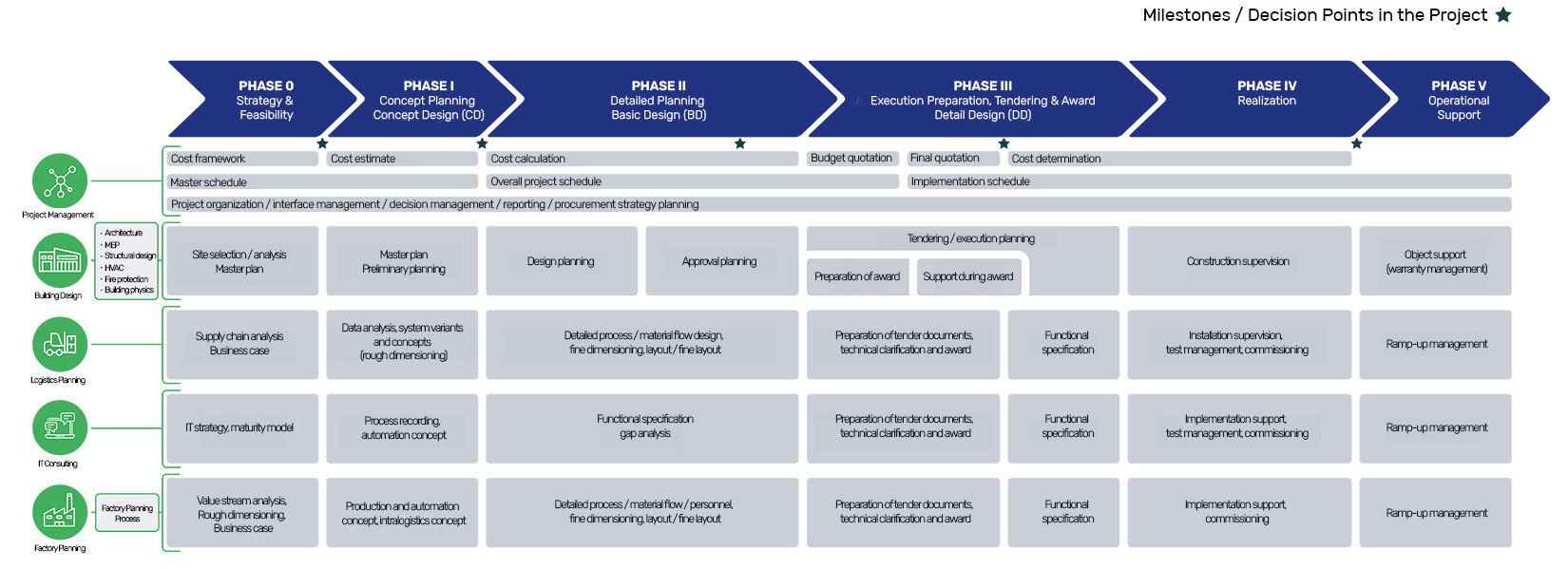
Professional project management guides and steers the project throughout its entire lifecycle—from the initial idea to final implementation. It ensures that complexity remains manageable, responsibilities are clearly defined, and decisions are transparent. Its tasks vary from phase to phase, but they all serve to ensure quality, cost control, and adherence to the timeline.
Throughout all phases, project management works closely with the specialist planner coordinator, who serves as the technical coordinator for the planning trades. Successful construction projects rely on the seamless interaction between these two roles, as well as their coordination and communication with representatives of all disciplines involved.
First, the project must be defined and its feasibility assessed. Project management ensures strategic clarity, which lays the foundation for all subsequent steps. Meanwhile, specialist planner coordination defines the interfaces between the involved disciplines. It also establishes common planning principles. The project is then structured, with duration and costs assessed, culminating in a comprehensive project plan. Key factors here are transparency and manageability. Errors made during this phase have exponential repercussions.
Optimal Control in Project Management
Success Through Strong Coordination
Specialist planner management therefore ensures technical compatibility between the various trades and facilitates the necessary coordination. Finally, it’s time to implement the project. Decision-making processes and priorities must be defined, teams of experts and contractors must be coordinated, and the availability of the necessary resources must be ensured. It is precisely here that project management fulfills its operational control function: it ensures stability so that any problems that arise do not derail the project. Meanwhile, the construction management team focuses on technical construction supervision—including overseeing inspections and approvals.
At the same time, it must always be ensured that the project remains within the time, cost, and quality parameters. The rule here is: trust is good, but control is better—which is why project management acts as an early warning system. Through transparent monitoring, ongoing risk assessments, the management of change requests, and regular reporting, it prevents the project from getting out of hand. Technical planning management plays a special role here: by assessing technical risks or making adjustments in line with project objectives when deviations occur, it serves as the technical backbone of project management.
Finally, the project is officially closed. Good project management ensures a smooth acceptance process and comprehensive final documentation, which—in conjunction with specialist planner oversight—aims to ensure technical traceability and operational readiness. The evaluation and preservation of lessons learned cap off this final step.