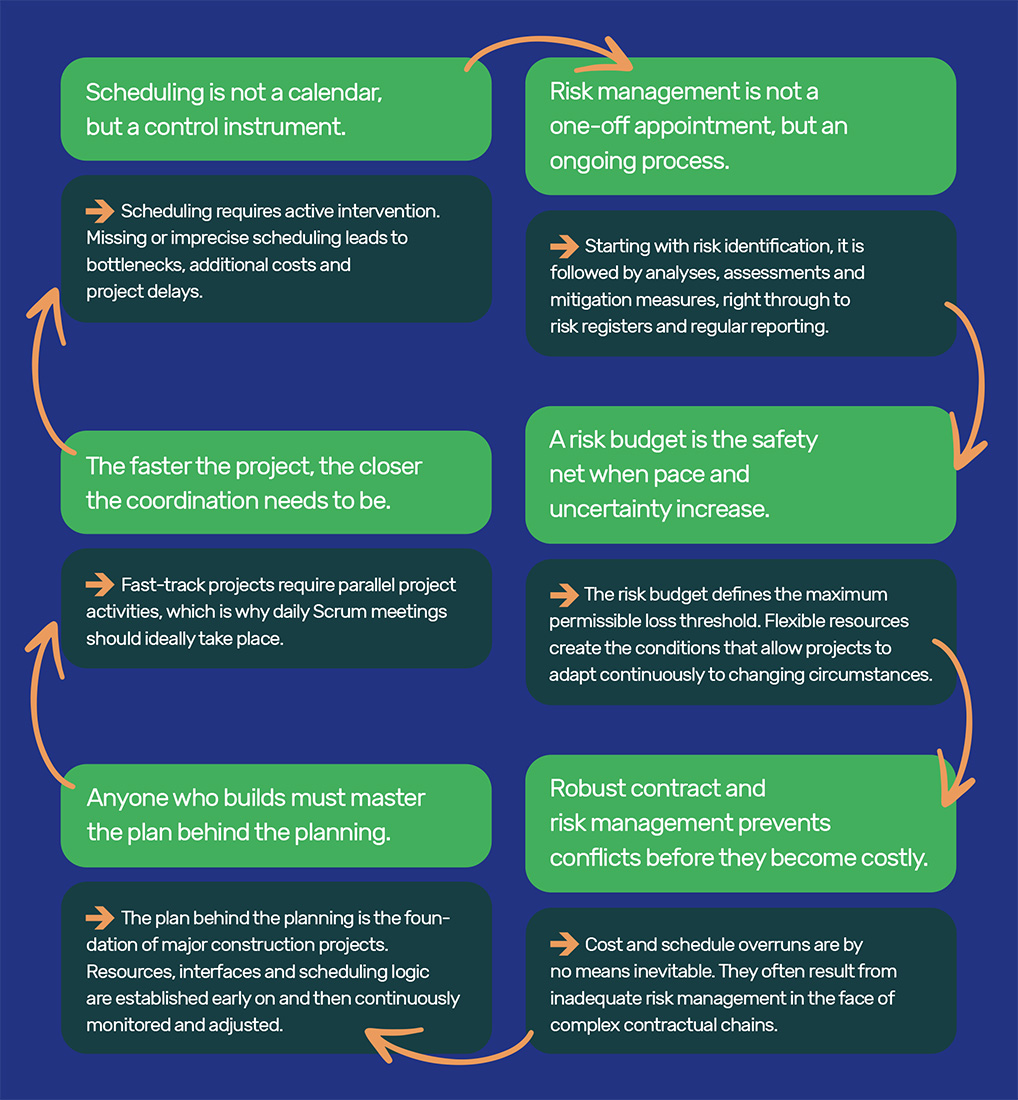
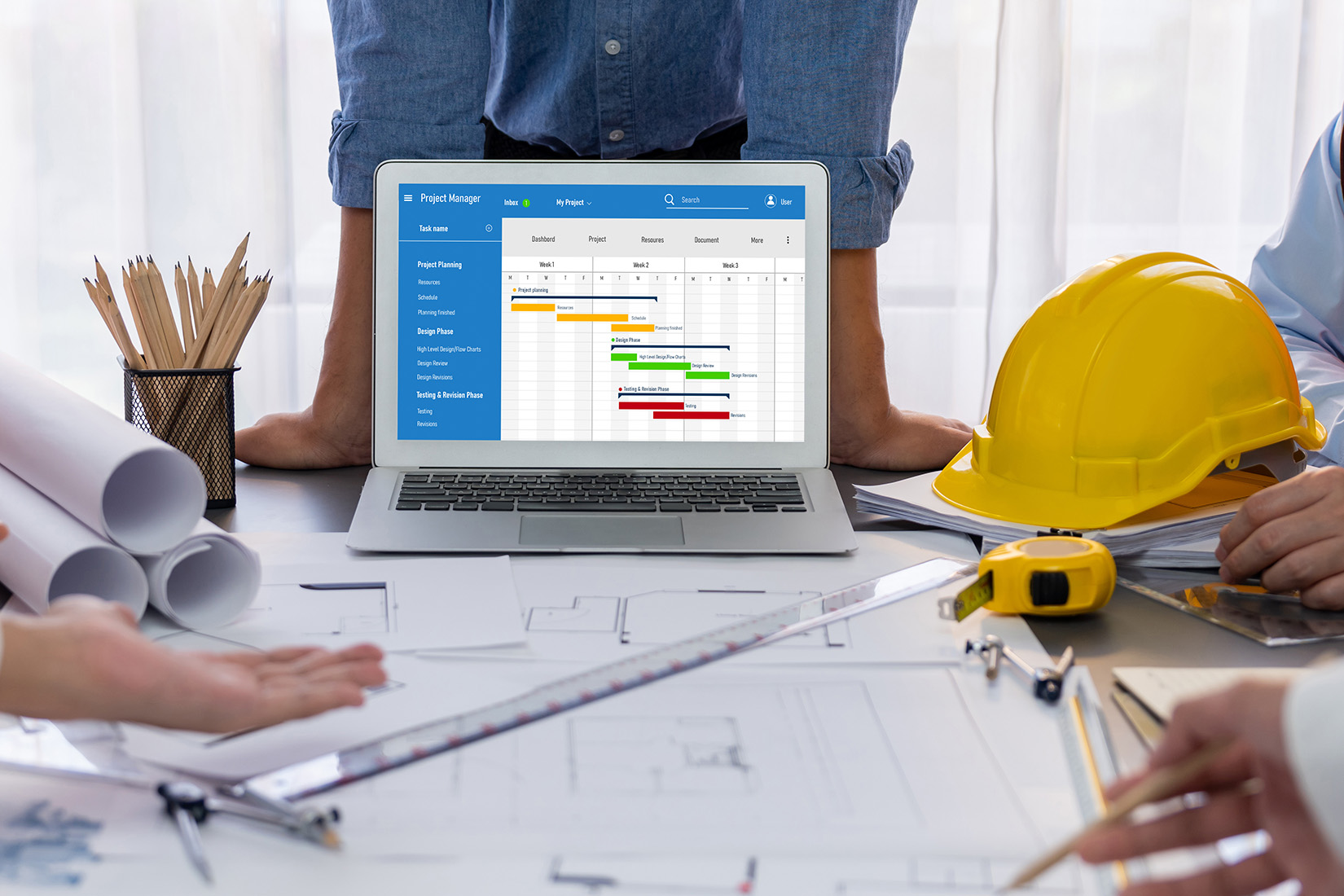
Scheduling is not a calendar, but a management tool.
×
Scheduling requires active involvement. A lack of scheduling or imprecise scheduling leads to bottlenecks, additional costs, and project delays.
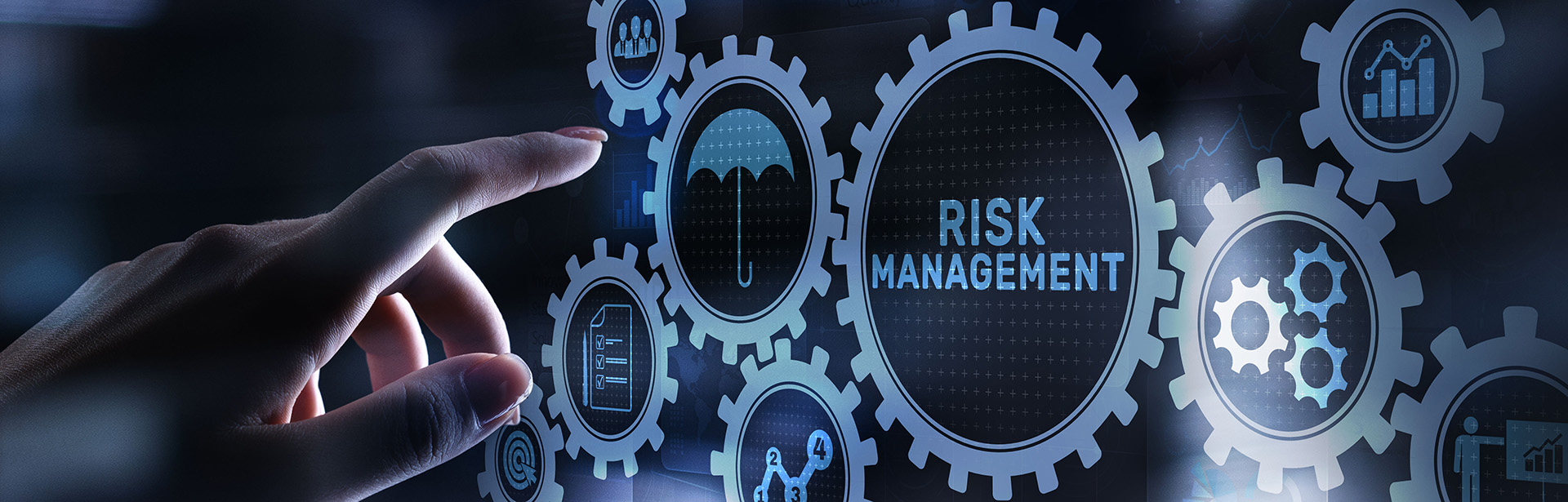
Risk management is not a one-time event, but an ongoing process.
×
Once risks have been identified, the process continues with analyses, assessments, and mitigation measures, culminating in risk registers and regular reporting.
A risk budget serves as a safety net when the pace picks up and uncertainties increase.
×
The risk budget sets the maximum allowable loss. Flexible resources ensure that projects can always adapt to changing circumstances.
Robust contract and risk management prevents conflicts before they become costly.
×
Cost overruns and schedule delays are by no means inevitable. They are often the result of inadequate risk management in the face of complex contractual chains.
Anyone who builds must have a firm grasp of the planning process.
×
The planning process forms the foundation of large-scale construction projects. Resources, interfaces, and scheduling logic are established early on and then continuously monitored and adjusted.
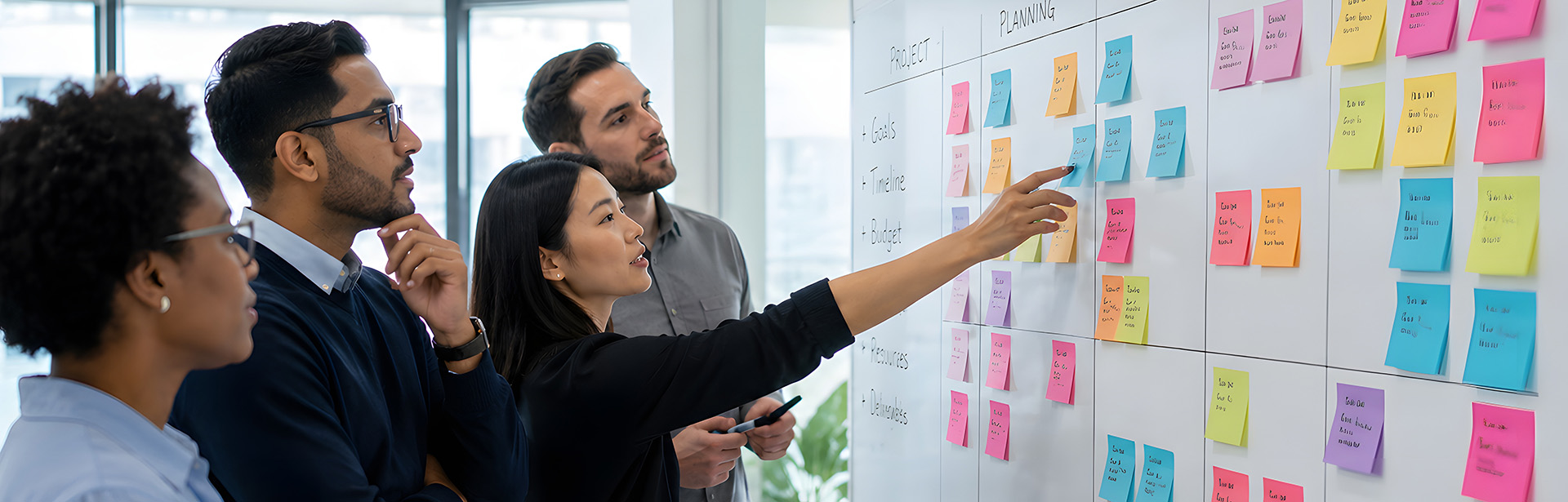
The faster the project, the closer the coordination must be.
×
Fast-track projects require project activities to run in parallel, which is why daily Scrum meetings are ideally held.
Added value for your project:
Write io a note that covers the key aspects of your construction project. Based on the information you provide, io will create a schedule for you—with no obligation and free of charge.