
Georg Willem Büchler

Georg Willem Büchler studied law and economics in Bayreuth. He is a partner at the law firm Schlatter and, as a specialist attorney in construction and architectural law, advises construction companies, real estate developers, architects, and engineers on all legal matters related to real estate. Advising property owners and commercial lease law are additional areas of focus. As a “digital native,” he also regularly handles IT law matters.
Do you have any questions? Attorney Georg Willem Büchler will be happy to assist you:
A guest column by attorney Georg Willem Büchler on artificial intelligence as a reliable colleague, an unassuming creator, and a defendant in future legal cases.
Artificial intelligence (“AI”) has become increasingly important in recent years and is now found in many areas of everyday life. From voice control in smart homes to self-driving cars: AI is ubiquitous and has the potential to improve our lives in many ways.
As the use and application of AI continue to grow, more and more legal questions are arising. To shape the future of AI in a positive way, it will be important to develop regulations and laws that address both the opportunities and the challenges posed by AI.
Liability
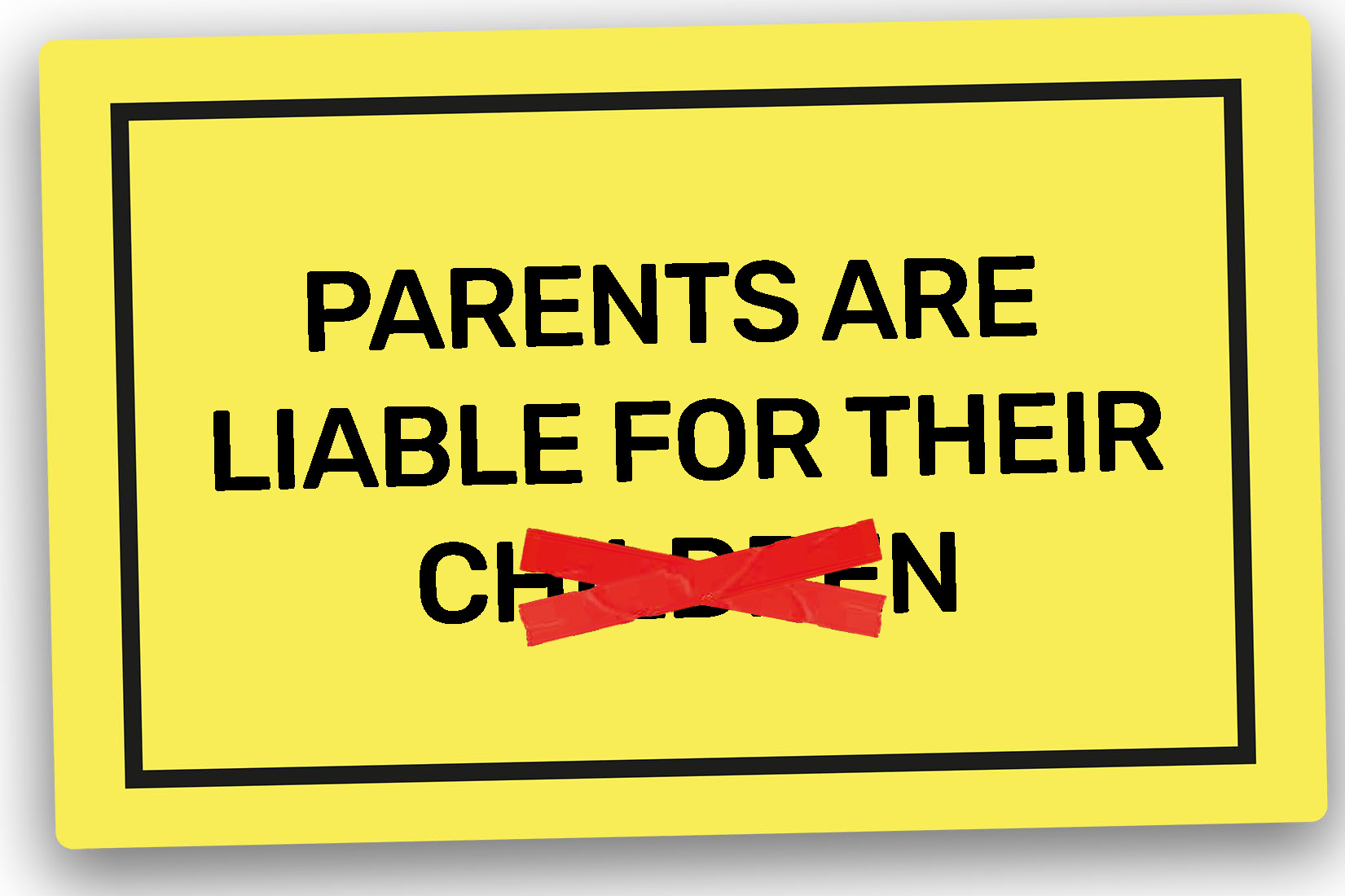
One of the most important issues related to AI is liability for decisions made by AI systems. To ensure that AI systems act in accordance with ethical and moral values and that responsibility for their decisions is clearly defined, experts are calling for the introduction of “AI sovereignty.”
But what if AI causes harm anyway? Who should then be held liable for such harm? Should the responsibility lie with the manufacturer or supplier of the AI? Or with the operator of the AI, who is responsible for monitoring and managing it? Or with the user, who is responsible for using the AI correctly and verifying its decisions? Or should all parties be held jointly liable? Should there be specific regulations to determine liability for damages caused by AI systems?
Did you notice?
Here’s a sudden shift. Very few readers likely noticed that the four preceding paragraphs were not written by the author. They were generated by the chatbot “ChatGPT.” With the brief instruction “Write me an introduction on the topic of AI and the law!”, supplemented by a few additional prompts such as “Focus the first paragraph more on the importance of AI in everyday life!” and “Insert meaningful paragraphs!”, a usable text was generated in no time—ready to be copied and pasted.
This fact alone impressively demonstrates how far AI has already advanced today and how it can assist us with many—even complex—tasks or even take them off our hands entirely.
With that said, this article will now provide the promised overview of some of the most pressing legal issues related to the use of AI. The author will now do this himself and will no longer rely on AI—promise!
Data Protection Law
AI relies on processing large amounts of data in order to function at all, and the more data it has at its disposal, the higher the quality of its decisions. This appears to conflict with the objective of current data protection law, which is to limit the processing of personal data to a minimum. Furthermore, the primary recipients of key data protection regulations, such as the GDPR, are human data controllers.
Thus, looming over all specific data protection issues is the question of whether our current data protection laws—which have their origins in the pre-digital era—are even suitable for striking a balance between the use of AI and the protection of personal data.
AI and Labor Law
The use of AI also raises legal questions at various levels of the workplace.
Is a job still externally determined by an employer if the employer’s role is limited to the decision to use AI, which then issues instructions autonomously? Only those who answer this question in the affirmative can regard the recipient of the instructions as an employee and grant them fundamental employee rights such as vacation time or continued pay during illness.
What are the implications of the fact that the use of AI typically aims to identify patterns in large amounts of information, for example, to classify job applicants accordingly? Do the provisions of our current anti-discrimination law—which is backward-looking in its focus on claims for damages and compensation—still apply? Or must new regulations be created that are more strongly oriented toward prevention?
Is there a need for greater employee participation in the workplace regarding the use of AI to ensure the protection of employees’ personal rights, especially when even the employer can no longer fully understand the decisions made by the AI it has deployed?

AI as the Author
When it comes to a work produced by AI, several aspects of copyright law come into play.
Protection under copyright law requires the existence of a “personal intellectual creation.” This makes the question of AI’s protection relatively easy to answer, since the programming of AI qualifies as a “personal intellectual creation.”
Things get more complicated when it comes to how AI works. A text generator regularly employs a technique known as “web scraping.” In this process, publicly available third-party information on the internet is continuously collected, analyzed, and processed by the AI itself for later use. But what are the consequences if the content obtained is itself subject to copyright protection?
Equally important is the question of whether the works generated by AI are themselves protected by copyright. Who is entitled to exploit them commercially? Alongside the issue of liability for AI decisions, there are many possible answers to this question.
Press Law
Complications also arise when AI is used in the context of journalistic publications. Who ensures that the legally mandated duties of care for the press are observed, and who is held accountable for non-compliance? What happens, for example, if AI fails to recognize fake news as such? Is a simple labeling requirement sufficient when using AI? At least in cases where the interests of third parties—such as their personality rights—are affected, the answer to the latter question is likely to be no.
AI in Planning Processes
It likely won’t be long before AI is routinely used in complex planning processes as well. The prospect of making planning decisions based on a virtually all-encompassing data set and being able to hedge against contingencies through automated forecasts is simply too appealing. But at the very latest when human decisions are made based on a flawed AI assumption and financial losses result, the legal battles will begin. Whether and to what extent a planner will be legally obligated in the future to ensure the correct application of AI or to (possibly by using an alternative AI) remains just as open as the question of whether planners will need to protect themselves against AI risks in the future, for example by taking out AI liability insurance.
Legal Framework Through Regulation
It remains to be seen to what extent policymakers will now initially define the regulatory framework. The Council of the European Union is currently discussing the contents of the future “Artificial Intelligence Act” (AI Act). The key here will be to strike a reliable balance between innovation and the protection of the fundamental rights at stake.


Conclusion
This article offers only a brief glimpse into the legal challenges we are facing as AI continues its triumphant advance. AI will bring about lasting changes to our (working) world and, in the process, put our legal system to the test. The extent to which the values established by our legal system—some of which are rooted in centuries-old traditions—will need to be renegotiated in light of the emergence of AI will remain a topic of debate for many years to come.
Only one thing is certain at this point: We are now at the beginning of an exciting journey into AI. Given the rapid pace of development, however, it is difficult for any of us to imagine where this journey will take us in the very near future.


