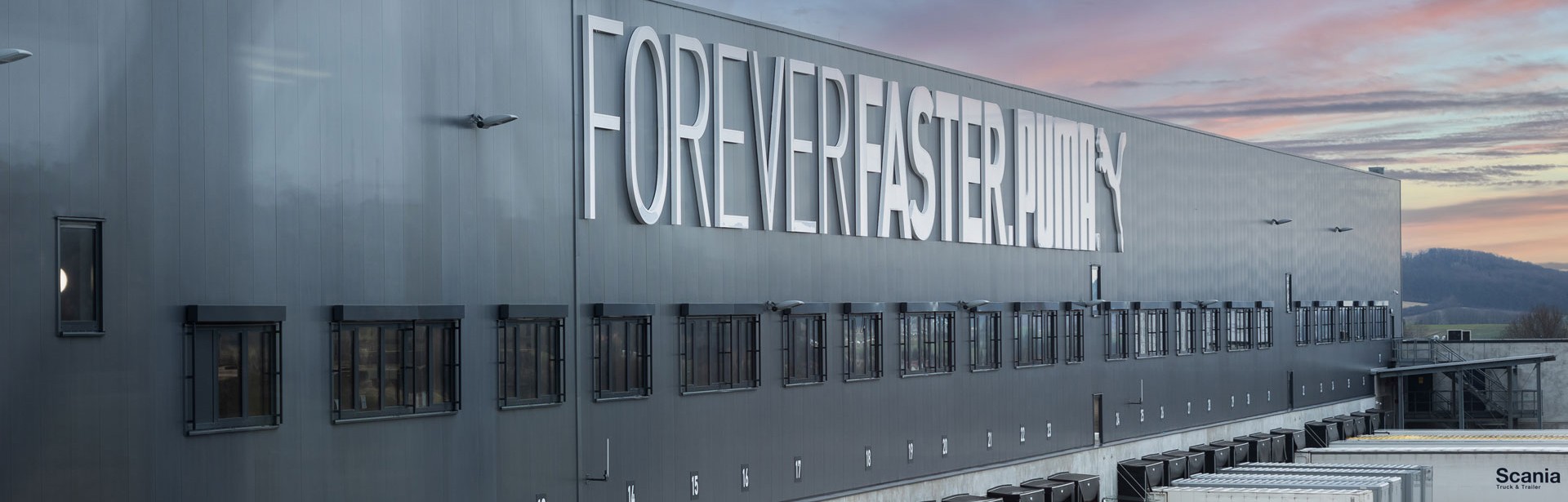
Architecture
Anyone who builds must comply with energy efficiency requirements, which initially increases costs. If greenhouse gas emissions are avoided in the process, subsidies—including those from the Sustainable Building Quality Seal—can be claimed. Trends in recent years have led to building permits imposing various sustainability requirements on building materials—including their recyclability. This is driving the decarbonization of the building sector. Due to rising taxes on greenhouse gas emissions, focusing on energy efficiency and the use of renewable energy pays off early on. On top of that, operating costs are decreasing,
This becomes a significant factor when considering the entire service life of the new building. Industrial buildings must also meet certain requirements regarding logistics, building services, and production—such as minimizing facade areas and walking distances, as well as designating space for photovoltaic systems. Furthermore, building design significantly influences employee efficiency. Good designs therefore lead to lower overall energy, labor, and material costs. Since labor costs in many companies significantly exceed energy and material costs, this is very important—not least in light of the shortage of skilled workers.
Project Management
Project management serves as the link between various departments with different areas of focus—which is why they also bring different perspectives to the field of sustainability. By bringing these respective areas of focus and needs together into a unified whole, project management also orchestrates the implementation of the individual aspects of sustainability. It operates across trades and stakeholder groups, with the overall focus on regulatory requirements and the client’s specific needs. This requires holistic planning from the very beginning. Only in this way can factors such as budget, site limitations, or environmental regulations—which may sometimes conflict across the trades involved—be optimally coordinated.

Building Services Engineering (TGA)
Building services engineering plays a key role in achieving sustainability goals. Studies show that most of the technologies needed to reduce greenhouse gas emissions have been available for years—heat pumps, for example, or photovoltaics. Planners integrate these technologies into the individual systems of production facilities—though their coordination must always be considered within the context of a sophisticated overall plan. The core task is to determine how demand can be met as sustainably and cost-effectively as possible. Energy management systems and appropriate storage solutions help to fully exploit the ecological and economic potential. A holistic
It is advisable to begin planning right from the start—ideally by a single interdisciplinary team. Within a cross-trade digital planning process, all planning details, steps, and changes can then be consolidated into a single model. From a building services engineering perspective, changes to the architecture or process planning can thus be taken into account immediately—which saves time and money and conserves resources. The data obtained can also be reused, for example, to analyze lighting in terms of its heat generation. It has a wide range of applications, particularly when it comes to certifications or grants.
Logistics
Logistics offers ample opportunity for sustainability initiatives. Its space and energy requirements can be reduced or even optimized for recovery, for example through automated guided vehicle systems (AGVs) and robots in intralogistics. In addition, resource consumption can be curbed—by eliminating plastic film or single-use packaging, using cardboard on demand, or recycling cardboard scraps as filler material. Furthermore, truck transport can be optimized in various ways. While retrofitting existing facilities initially requires more planning effort than building new ones, However, the advantages of continuing to use existing facilities are obvious—especially with regard to sustainability. This is particularly true when a general planner can evaluate the measures taken in this context in their entirety in advance.

IT
As IT’s share of a company’s value creation increases—along with its impact on production machinery and accounting—so does its influence on sustainability aspects, which extend far beyond the energy requirements of servers and laptops. Modern technology can significantly reduce electricity consumption—and, as a result, greenhouse gas emissions. The same applies to consolidating multiple systems: through centralization and virtualization, they can be implemented with less hardware. The use of AI or the caching of complex CFD calculations can also reduce computing requirements—and, at the same time, staffing needs and development times. In production and logistics, modern digital warehouse systems can shorten travel distances, thereby reducing energy consumption. IT can also be used to determine the demand for compressed air, for charging forklifts, or for the electric vehicle fleet. Furthermore, companies that offer high-quality IT services can improve employees’ work-life balance and reduce commuting distances—all in line with the principles of environmental, economic, and social sustainability.

Pharmacy
The pharmaceutical industry is all about balancing ethical, economic, and social considerations. To contribute to global health, its processes often require significant amounts of raw materials and resources. The goal is to make these processes more sustainable, thereby minimizing consumption and waste generation while optimizing production—which reduces operating costs and ensures the availability of raw materials. It is also essential to prevent emissions of greenhouse gases and other pollutants. In addition to these internal factors—which can be influenced by advanced technologies and production methods as well as by research and development—external factors that promote sustainable practices have long since been established: sustainability standards, environmental regulations, and production requirements set by authorities and governments. These also affect working conditions in the pharmaceutical industry, which are characterized by restrictive protective clothing and potentially hazardous substances. In the interest of social sustainability, it is therefore important to consider workplace ergonomics as early as the planning process.

Factory Planning
Factory planning is geared toward the efficient and cost-effective production of goods. Services from all other areas of a factory (e.g., building services, IT, logistics) are essential to this process, as only their seamless interaction ensures market-competitive production. To this end, for example, walking and transport routes are shortened, space requirements are reduced, waste is avoided, and energy consumption is lowered—which is why factory planning has a significant impact on all aspects of sustainability. Coordinating factory planning with the specific plans for each department is particularly effective
It is beneficial to break down the relevant requirements to their essentials and combine them as early as possible in the planning process. In practice, workshops help to work out the fundamental requirements and conditions of factory planning, material flow, and architecture with the contractor, so that they can then be coordinated across the various disciplines. In this way, the expertise of the specialist planners, the relevant experts, and the future users can be efficiently pooled—and key interfaces can be identified and defined at an early stage.

Conclusion
Sustainability is multifaceted. Depending on the perspective, it has different focal points. Within the disciplines involved in the planning of factory buildings or logistics centers, the various aspects of sustainability influence one another. The multitude of interfaces resulting from this interplay defines the central role of factory planning within the various trades involved. The coordination that takes place within complex planning processes is particularly efficient when it occurs early on. This is the only way to ensure that all individual requirements are directly taken into account and evaluated holistically.
This is precisely where io comes in as a general planner: By offering all planning services from a single source, it facilitates fast and streamlined communication. Furthermore, this approach allows io to identify key interfaces early on and align them with one another, laying the foundation for efficient production and sustainable operations. In addition, the client benefits from having a single point of contact.