“The best thing about the future is that it’s always served to us one day at a time,” as Abraham Lincoln once said. Yet that’s only half the truth. Because sometimes the future doesn’t come in small doses, but all at once. Because just like that, a virus suddenly turns our entire lives upside down—from mundane daily routines to global trade. Or a war breaks out. With all the terrible consequences we’d rather have pushed out of our minds forever.
Success Factors in Modern Project Management
But repression is not a good partner when it comes to facing the future. Rather, it’s time to act. Today. “The COVID-19 crisis, in particular, has shown just how vulnerable entire industries can be to disruption. Many companies had to literally turn their structures upside down overnight and adapt to the new circumstances. They suddenly had to jump into e-commerce. Come up with hygiene protocols on the fly. Or restructure their logistics to ship not just large pallets to distributors, but small packages to end customers,” says Thomas Kilimann, CEO of io, adding, “The greater the pressure for change a company faces, the faster it expects comprehensive solutions—from architects, computer scientists, industrial engineers, and other experts.”
Location Selection, Automation, and Sustainability as Megatrends
Currently, according to Kilimann, the question of location, for example, is significant for many decision-makers. This is because the trend is clearly shifting toward changed supply chains. “Many companies are now questioning whether they should continue to manufacture in China as a matter of course. And whether European or even German locations might not also be viable options—and perhaps even better suited.” In addition, a shift toward automated processes is emerging across all industries. The topic of sustainability is also increasingly coming into focus as a megatrend. Climate neutrality is the buzzword of the moment, especially in light of the energy crisis—and many companies are setting firm deadlines. “For example, any company aiming to become climate-neutral by 2030 is setting an ambitious goal. Energy-intensive industries, in particular, will have to invest heavily to achieve this,” says Kilimann.
Sustainable Center of Excellence for Medical Technology in Rangendingen
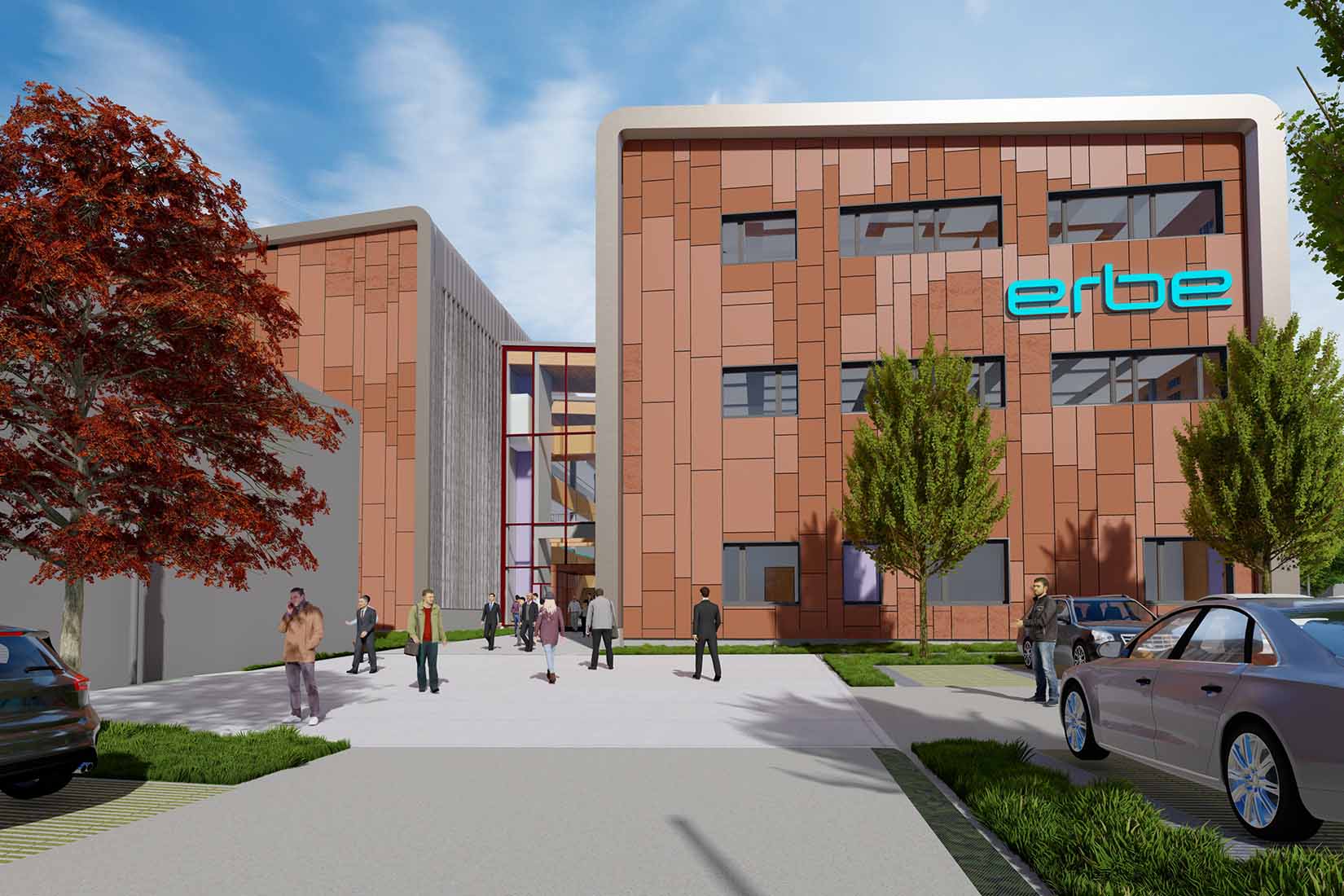
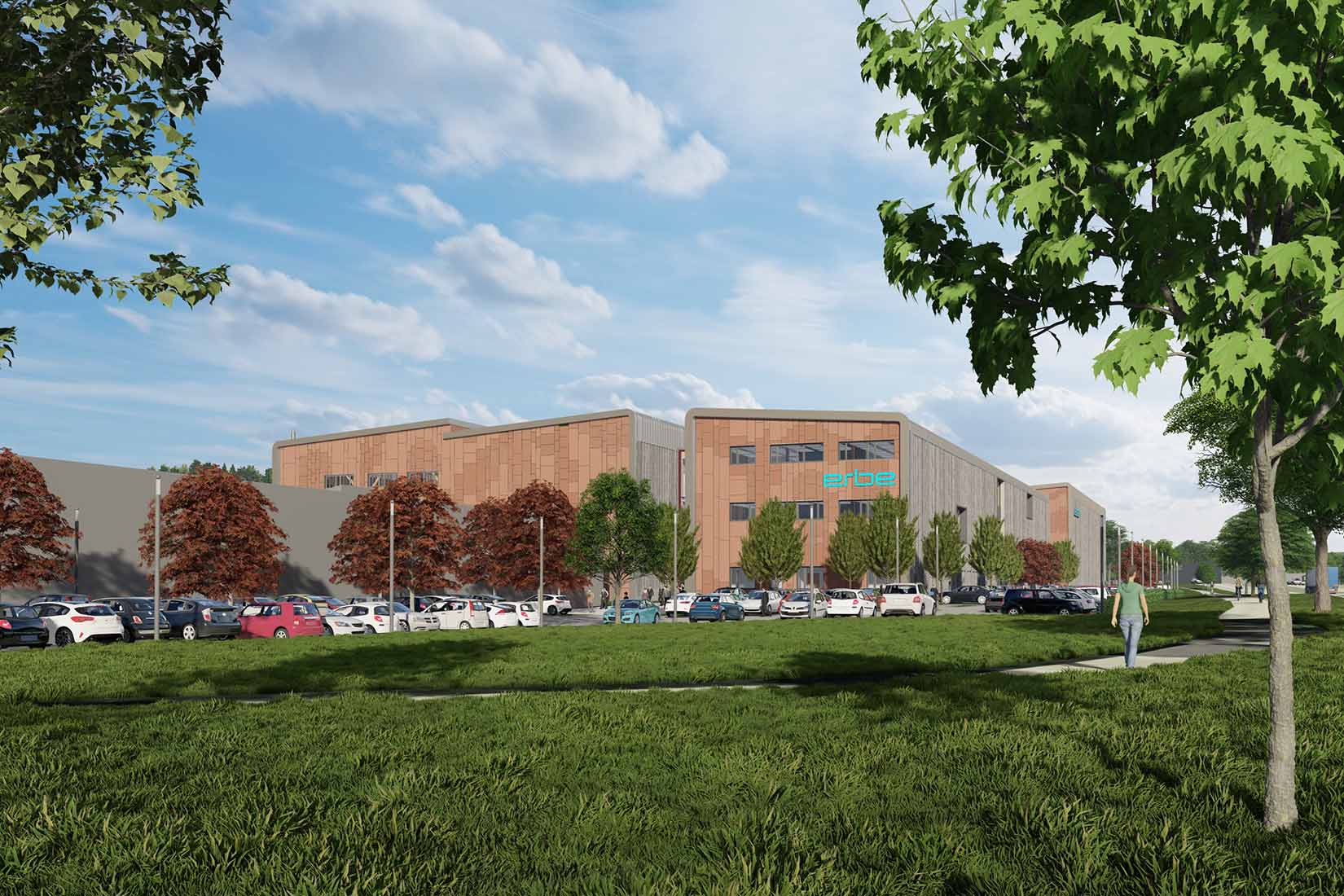
For example, io is currently building a sustainable center of excellence for medical instruments in Rangendingen for the company Erbe. The core concept behind the preliminary master planning was to create a building that effectively blends into the region’s natural environment. It will be one of the first industrial buildings in Germany to meet the high requirements of the KfW Efficiency House Standard 40—and thus consume 60 percent less primary energy than comparable buildings. Of course, this requires a wealth of expertise. “But our employees bring that expertise together,” says Kilimann. io employs around 350 experts from various fields and trades. “They cover all essential disciplines, enabling us to provide our customers with comprehensive support from the very start.”