
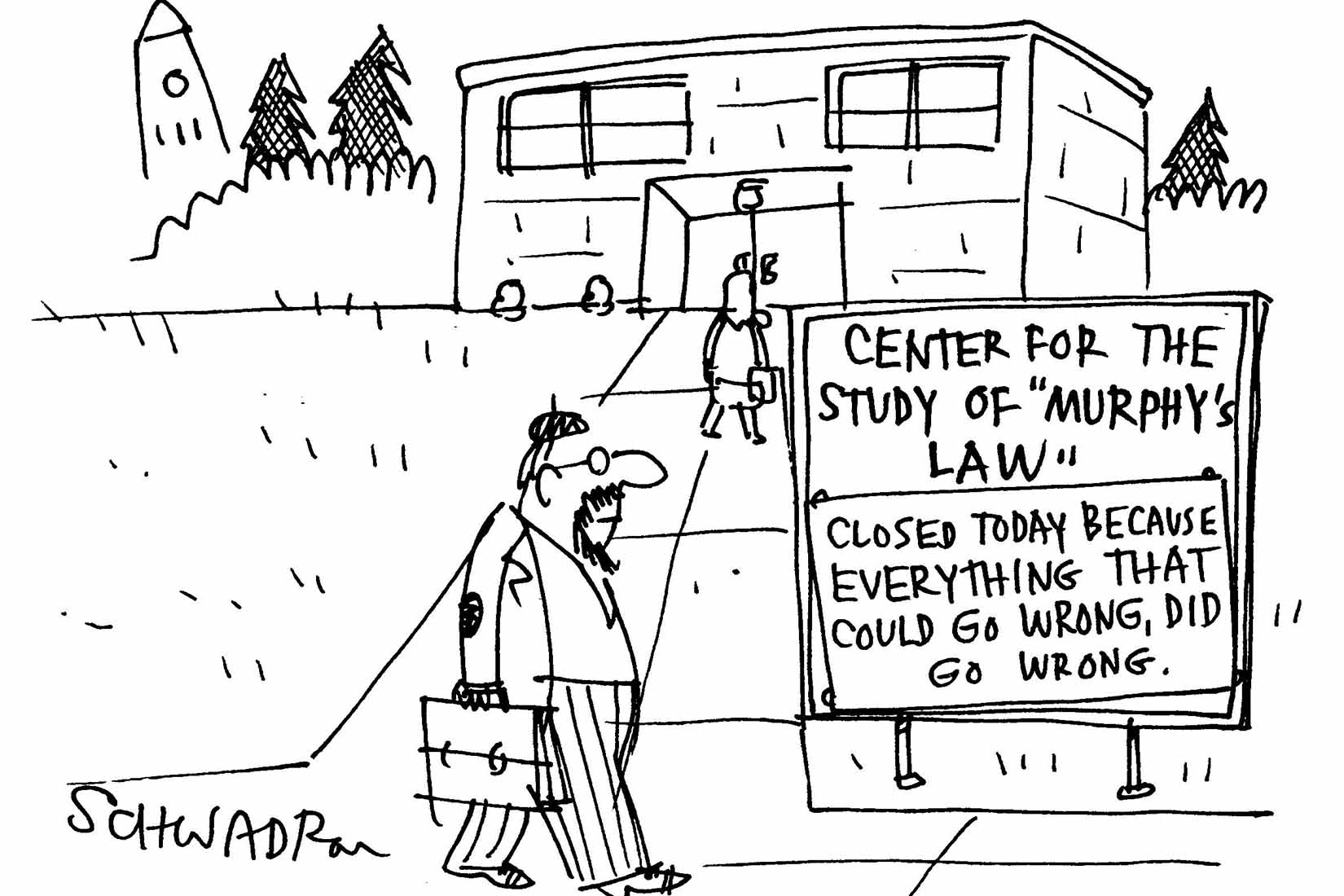
“Anything that can go wrong will go wrong,” says Murphy’s Law. Everyone knows it: table, bread, spread—splat—what a mess. That’s not pleasant. It gets really bad when Murphy’s Law strikes during major undertakings. In projects that, simply because of their scope, are prone to accidents and setbacks. Unless, that is, you’ve taken precautions—and rely on well-thought-out project management as your anchor and backbone.
However: Project management—it’s easier said than done. It’s also easy to describe: Kick off a project, structure it, delegate, coordinate, and bring it to a successful conclusion. But that doesn’t capture the sheer reality of large-scale undertakings. Leading elephants across the Alps, building pyramids in the desert sand, landing a space capsule on the moon. Where do you even start? Professionals know: at the beginning. What you’ll find there: dos and don’ts.
Do
Requirements Planning
Requirements planning is a fundamental tool for quality assurance. It establishes the project framework, defines the client’s requirements—and results in the requirements plan. This plan summarizes the qualitative and quantitative requirements and sets the financial and schedule parameters as well as all project objectives. This creates effective starting points—and eliminates the need for ongoing coordination loops. According to the Fee Schedule for Architects and Engineers (HOAI), requirements planning is not part of the basic scope of services and must therefore be billed separately.
Don't
Neglect Change Management
Changes in project management are deviations from the contractually agreed-upon target state. They can result, for example, from changes in planning requirements, new insights, or bottlenecks in the supply chain. For further processing, changes must be classified based on the scope of work. Ideally, change management is implemented early on, including clear rules and procedures.
Stakeholder Management
Key decision-makers and representatives of the departments involved must be integrated in a timely and appropriate manner. This avoids the need for repeated coordination and prevents disputes arising from divergent individual perspectives. Therefore, stakeholder management is the responsibility of both the planner and the client.
Uncertain Contractual Status
Work has begun, but the contract hasn’t been signed? That’s a problem. Is there uncertainty about the services to be provided? That’s a problem, too. The only solution in either case is to clarify the commercial terms. Both contracting parties must be fully “in the loop” in order to avoid, for example, the transfer of commercial risks to the client or the designer.
Project Initiation
This phase defines the steps leading from the initial project idea to the fully implemented project. This requires an effective and efficient structure serving as a “plan for planning”—and, ultimately, a team tailored to the project’s needs, as well as a clear, methodical, and systematic approach. It is advisable to describe the responsibilities of each role in an organizational chart and to clarify organizational interfaces. In addition, for example, stakeholder lists, calendars, and communication guidelines must be managed.
Lack of Communication Structures
Who says what, when, and how to whom: If communication breaks down, it can lead to lost information, misunderstandings, a lack of transparency, or a lack of alignment in planning. A jointly agreed-upon meeting schedule prevents this. It includes all meetings along with their agendas and objectives. Communication rules to enable centralized coordination of processes. And finally, agreed-upon rules governing, for example, how data is stored and exchanged.