Virtual Precision for Real Systems
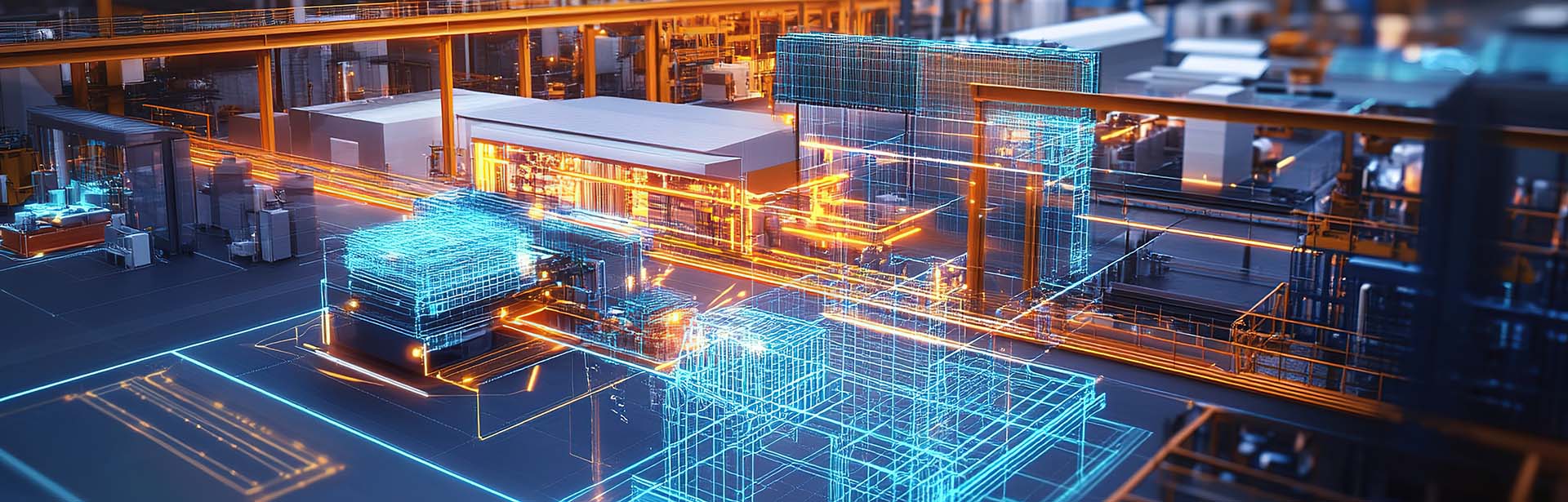
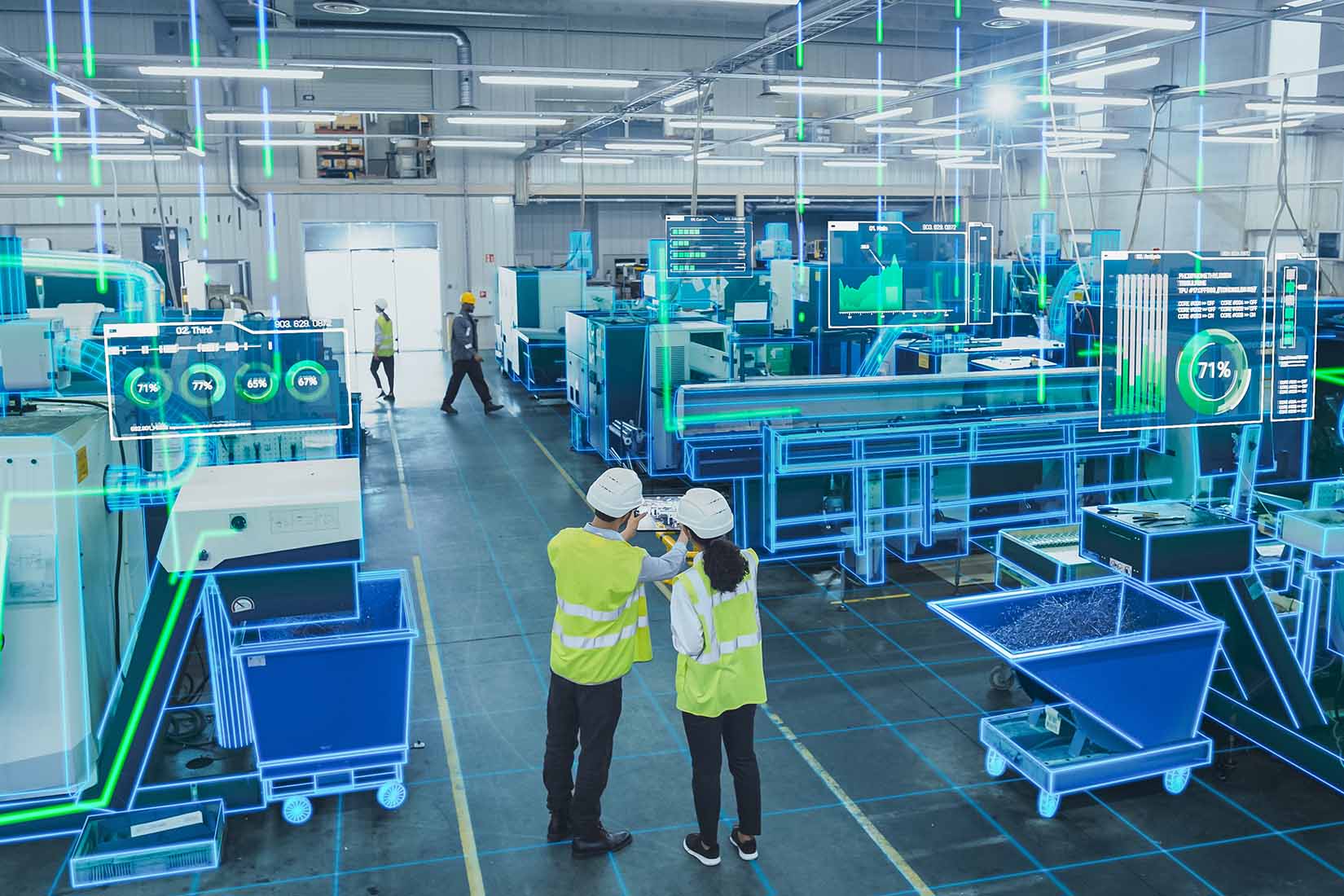
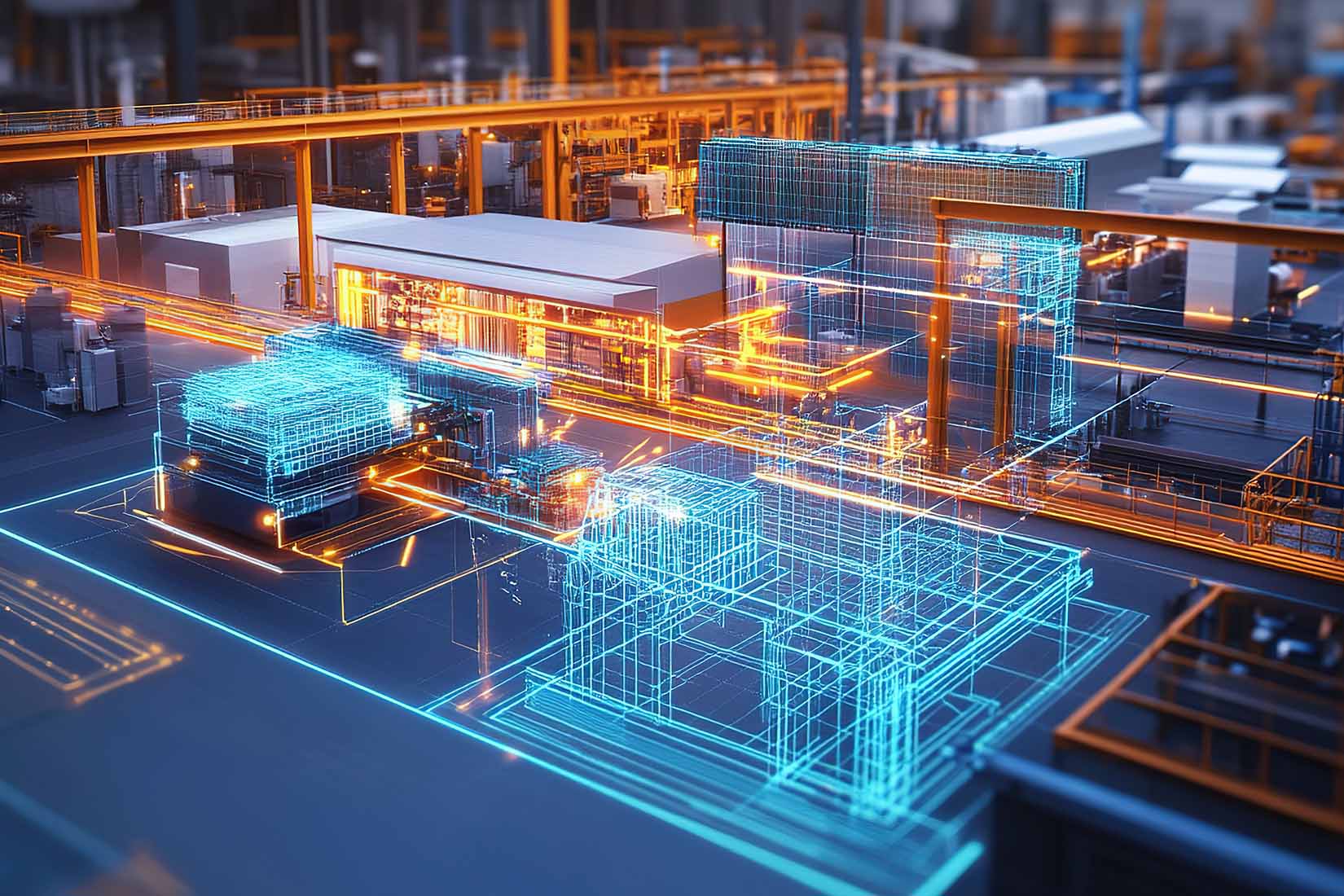
Digital twins are data-driven representations of real-world systems, objects, or processes. As virtual reflections of reality, they are more than just static models: They mirror their underlying originals in real time, enabling them to visualize states, analyze relationships, simulate developments, test changes, and predict maintenance needs. io typically works with four types of digital twins: the product twin, the human twin, the process twin, and the system twin. Strictly speaking, however, as a planning firm, io only creates a true twin at the end of a project’s implementation, since the real-world counterpart is still in the process of being created during its implementation.
Product twins are used to coordinate the planning, layout, and appearance of a building with the client before construction begins. To this end, virtual environments are created that reflect the plans. For example, in a virtual space, one can walk through the future entrance area of a factory hall or the storage area of a logistics center to gain an impression of the spatial layout and design. As the project progresses, these initially visually oriented twins are often further developed—for example, through detailed representations of individual elements such as doors, machines, windows, piping, or cable trays—so that they always correspond to the current real-world situation. Once construction is complete, the goal is to refine them so that they correspond as closely as possible to the built reality.
Testing Workstations Virtually
Depending on the task and its complexity, io also creates human twins, usually based on predefined human models. This allows, for example, the arrangement of containers at workstations or of equipment to be optimized so that future colleagues will find ergonomic workstations. Sometimes, such workstation designs are also transferred to the building twin to simulate specific situations or processes. The greater the level of detail in the digital twin, the more complex the design and integration become.
Making Process Data Usable
At io, process twins are created to design SAP systems in which the posting and workflow logic mirror the underlying real-world processes. They are also used for dashboards and information systems that display the status of real-world processes, such as the number of open orders or the occupancy status of workstations. In most cases, data from operational systems is used for this purpose—and is ultimately aggregated and processed in such a way that it provides meaningful insights.
Keep it simple
The design of system twins also begins as early as the planning phase, for example in the form of simulation models for logistics and production systems. Models that simulate the interaction of existing and new plant components as a future integrated system—as a basis for system analyses—are particularly interesting in expansion projects.
Creating a digital twin involves considerable effort, depending on the level of detail. It is strongly recommended to critically evaluate the necessary level of detail. As a general rule: keep it simple—and as straightforward and focused as possible. After all, the digital twin must become an integral part of the processes in order to deliver its full value. Furthermore, it must be reliably supplied with accurate data.
The Digital Edge
However, such investments usually pay off quickly. The immediate benefits of digital twins are evident, for example, in ergonomic studies: It is often more efficient to model a virtual workstation than to build a physical prototype for ergonomic design.
io has been working with digital twins for years. The company has extensive expertise in creating, operating, and integrating them into day-to-day operations—to the benefit of its customers.