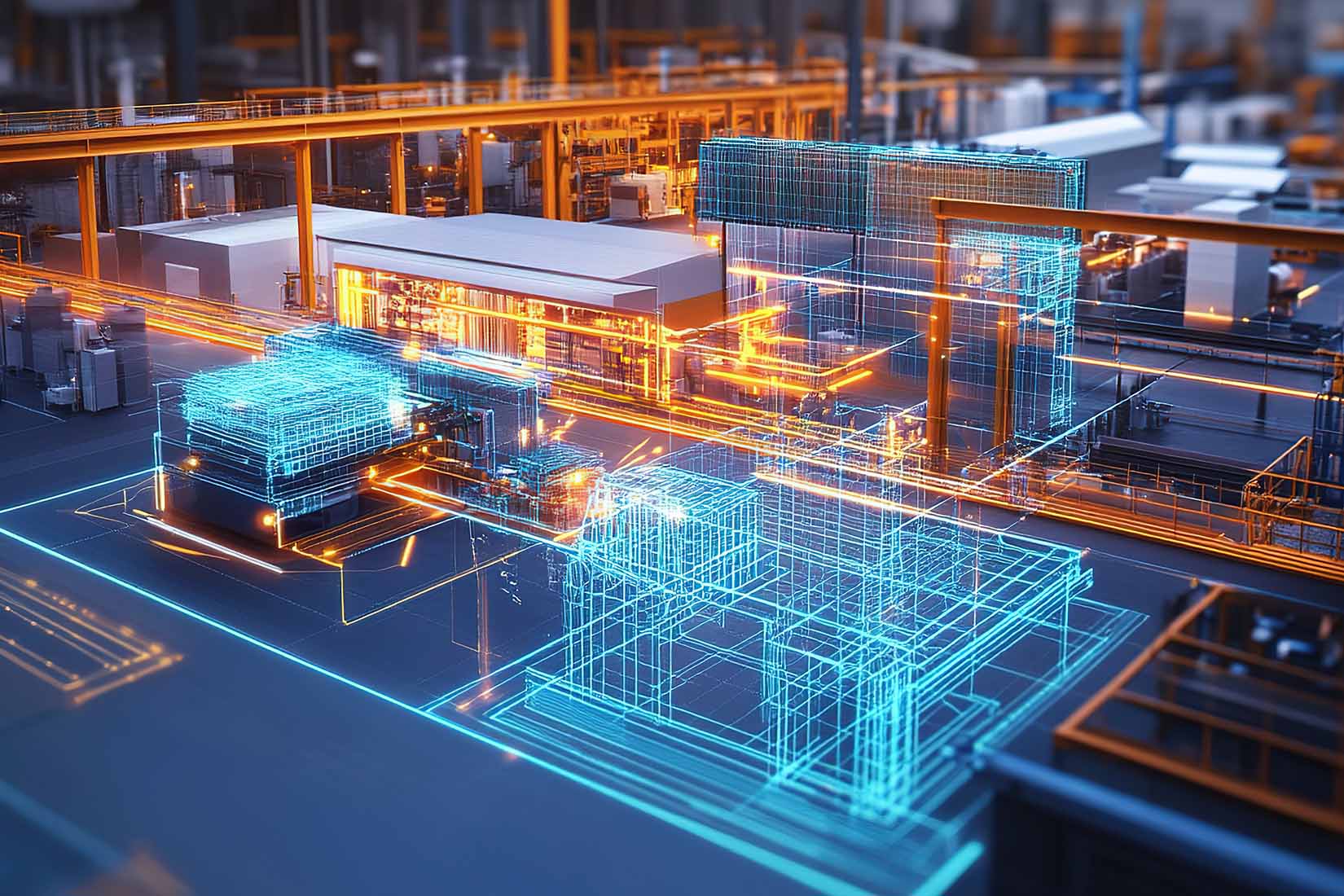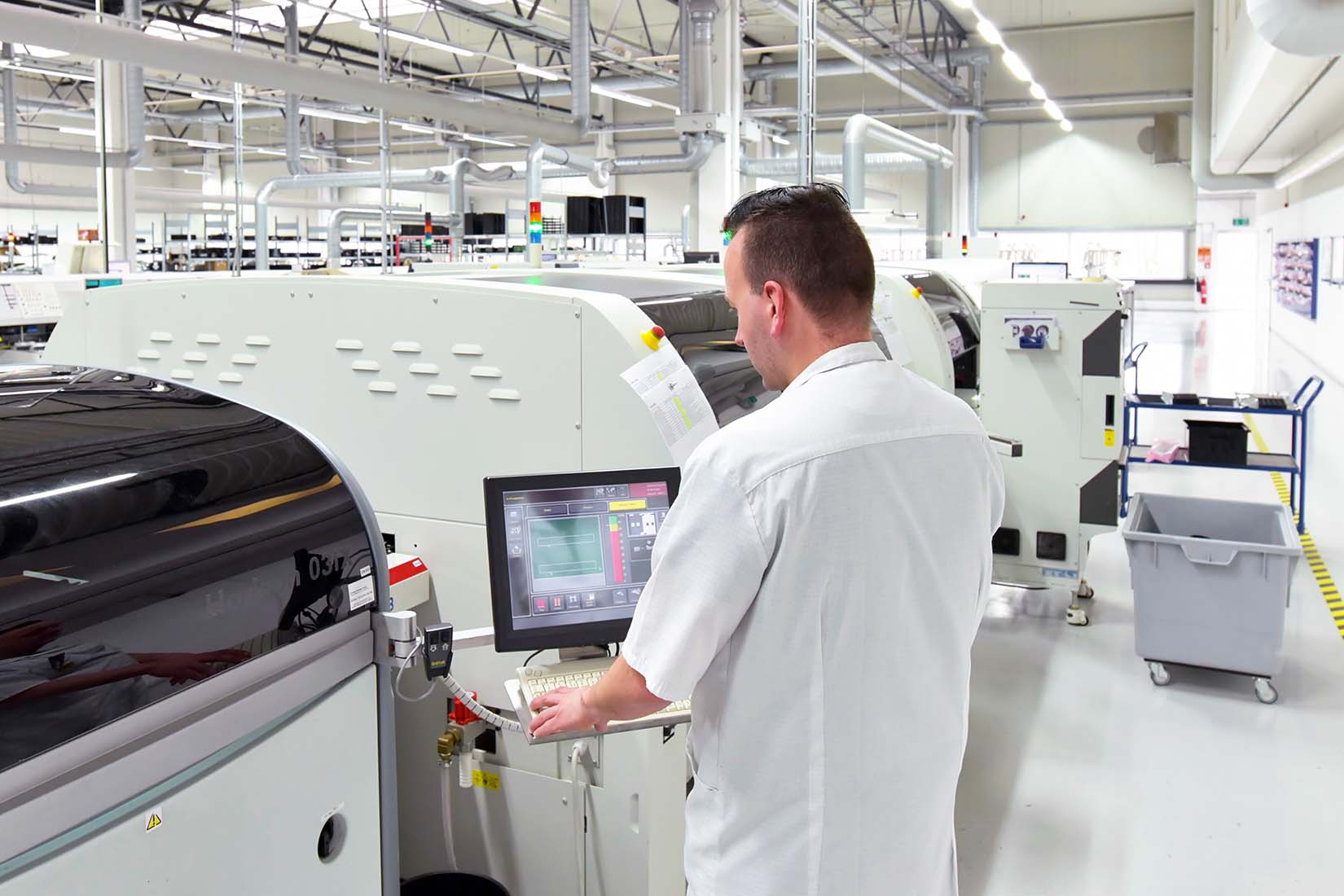
The cloud-based Manufacturing Execution System (MES) SAP Digital Manufacturing (SAP DM) serves as a bridge between the shop floor and enterprise IT. The solution enables end-to-end vertical integration from the machine to the ERP system and includes the Execution, Insights, and Resource Orchestration modules. Machines are connected securely and in a standardized manner via the Production Connector and the Cloud Connector. Configuration takes place in SAP DM using Production Connectivity Apps. Common industry protocols such as OPC UA, MQTT, and REST APIs can be used for communication with the machines.
“Technical integration is one thing—but another key factor lies in how companies can use the data generated to specifically improve their production,” says Dominik Stemler, Senior Consultant and SAP DM expert at io.
Companies benefit directly from this real-time connectivity: efficiency and transparency increase, quality and flexibility improve, and resources are used more sustainably. Machine integration with SAP DM thus makes manufacturing more transparent, agile, and efficient—a central component of a smart factory’s digital infrastructure.
USE CASE 1:
Weigh & Dispense
Function: SAP DM connects the scale directly to the system and automatically reads weight values. This speeds up the weighing process and prevents data entry errors.
Example of Use: Previously, an employee had to manually read each weight value and enter it into the system. Now, the value appears immediately in the SAP DM Production Operator Dashboard (POD) and can be confirmed as a consumption posting with a single click—faster and error-free.
Benefit: Increased efficiency
Complexity: 2 out of 5
Technology requirements: low (standard scale interface, POD plugin available)
USE CASE 2:
Alarming
Function: SAP DM monitors critical machine parameters in real time and automatically generates an alarm as soon as a threshold value is exceeded. This allows quality issues to be detected directly within the process and addressed immediately.
Application Example: In a mixing plant, the temperature unexpectedly rises above the setpoint. Thanks to the integration, SAP DM detects this instantly and triggers an alarm, which is reported in the control room and via email. The production team can react immediately and shut down the plant before any scrap is produced.
Benefit: Quality assurance
Complexity: 3 out of 5
Technology requirements: moderate (sensor connection to SAP DM, configured alarm workflows)
USE CASE 3:
Collection of Process Parameters
Function: SAP DM automatically logs key process parameters in the background. Relevant measurement values from a machine are read at the right time and directly assigned to the active production order. This reduces the need for manual documentation and ensures complete data capture.
Application Example: In the past, after a cooling process, the operator had to read the final temperature and enter it into SAP. Now SAP DM handles this task: As soon as the cooling cycle ends, the system reads the temperature value from the machine and saves it with the corresponding order. The operator no longer has to enter anything—and all process data is automatically assigned to the batch.
Benefits: Transparency & time savings
Complexity: 2 out of 5
Technology requirements: low (standard sensor interface, configuration of data collection in SAP DM)
USE CASE 4:
Machine Setup & Release
Function: SAP DM ensures that a machine only begins production with the correct order and only after digital approval. Through SAP DM, order-specific target values can be sent to the machine control system; the machine is unlocked as soon as SAP DM authorizes the start. This prevents production errors caused by incorrect settings.
Application Example: Previously, an operator could accidentally start a machine even though the correct order had not yet been loaded or QA approval had not been granted. Now, the operator selects the production order in SAP DM and clicks “Approve.” The machine then receives a start approval signal. Only after that can the start button be pressed. This ensures that the machine runs only when everything has been correctly approved.
Benefit: Process reliability
Complexity: 3 out of 5
Technology requirements: moderate (bidirectional integration of recipe data or approval signals into machine control)
USE CASE 5:
Change in Resource Status
Function: SAP DM records changes in machine status (start, stop, malfunction) in real time directly from the plant control system. All running and downtime periods are recorded accurately, along with the reason. This provides transparency regarding lost time and improves the calculation of equipment availability (OEE availability KPI).
Application Example: The machine immediately reports every status change to SAP DM. For example, in the event of an unplanned stoppage (reason: “material replenishment missing”), a signal is sent to DM immediately. The shift supervisor sees in real time on the dashboard that Machine 3 is idle due to a material shortage and arranges for replenishment. At the same time, the exact minute of downtime is automatically included in the OEE statistics.
Benefit: Higher equipment availability
Complexity: 2 out of 5
Technology requirements: low (read standard PLC signals, use OEE functions in SAP DM)
USE CASE 6:
Automatic Start & Complete
Function: SAP DM automatically starts and stops operations in the production order in sync with machine activity. As soon as an order is released in DM, the machine receives the start signal; when the last piece is produced, the machine reports completion. This ensures that production times and quantities are seamlessly recorded, and the performance KPI (production speed) is calculated correctly at all times.
Application Example: When the machine starts running, SAP DM initiates the order in the system simultaneously. Once the batch is complete, the machine sends a completion signal, and SAP DM marks the order as completed. The actual lead time per batch is precisely recorded in the system. Deviations from the target cycle time become immediately visible and can be analyzed.
Benefit: Productivity transparency
Complexity: 3 out of 5
Technology requirements: moderate (mapping of the standard rate as a prerequisite for comparison with actual lead time)
Today, machine integration with an MES such as SAP Digital Manufacturing is often a central component of digital infrastructures in manufacturing. It provides the technical foundation for seamlessly connecting processes, leveraging data in real time, and taking operational decisions to a new level. The use cases presented here demonstrate how SAP DM can deliver tangible benefits—ranging from faster processes and improved quality to greater transparency and sustainability.
Companies that want to pursue this path face strategic and operational questions: Which machines should be connected? Which use cases deliver the greatest benefits?
How do you get started—and how do you roll it out? “Machine integration” is the key to real-time production. SAP DM brings the necessary intelligence directly to the machine—and turns data into real added value,” says Stemler. As a partner with extensive experience in implementing SAP DM, we’ll help you answer these questions and implement your machine integration in a targeted manner—whether as part of a proof of concept, a pilot project, or a global template strategy.
Contact us—we’ll guide you on your journey to a smart infrastructure.