From the Lecture Hall to the Workplace
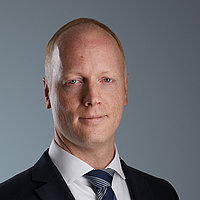
The connection between academia and industry is a key factor in innovation. That is why Dr. Jens Ludwig, Principal Consultant at io, serves as a lecturer at the Institute for Material Handling and Logistics Systems (IFL) at the Karlsruhe Institute of Technology (KIT). His teaching is a separate commitment that he pursues independently of his role at io—yet it provides important impetus for both sides.
Exchange with Added Value
The focus is on targeted knowledge transfer between research and practice. Ludwig brings his many years of experience in logistics planning to his teaching, giving students a realistic insight into the world of intralogistics. At the same time, insights gained from the university’s examination of current issues flow back into practice. This exchange benefits both sides.
Practical instruction with direct ties to the industry
In the course “Warehouse and Distribution Systems,” Dr. Jens Ludwig not only teaches theoretical fundamentals but also supplements them with numerous real-world examples. “Using images, videos, and insights into real-world projects, students learn more effectively. Through field trips, they experience how the knowledge taught in the lecture hall is applied in practice,” says Ludwig about this approach to teaching.
Inspiration for KIT
Especially at a technically demanding university like KIT, where the focus is often on theoretical models and calculations, this connection to real-world practice serves as a valuable complement. “This helps students better grasp the textbook material and gain a better understanding of the relevance of their education,” explains Ludwig.
Concrete Results: Theses with Added Value
Because the course is not only theoretically sound but also practice-oriented, students regularly write theses that address specific issues in intralogistics. One example is the development of a tool for sizing and evaluating pallet shuttles—an innovative warehouse technology that is becoming increasingly important in modern intralogistics.
This thesis combines complex theoretical models and simulation approaches with practical requirements such as cost structures and technical constraints. The result is a tool that can be used in both teaching and industrial applications—a successful example of knowledge transfer in action.
Trends in Logistics: Focus on Flexibility and Complexity
To incorporate evolving developments into teaching, Ludwig relies on modern digital tools. New warehouse systems based on mobile robots are increasingly replacing traditional, fixed-installation technology.
These systems enable more flexible operations and easier scaling of the level of automation. At the same time, however, complexity is increasing: Many of these solutions are difficult for users to understand and can no longer be evaluated using traditional computational models. This calls for new methods. For example, complex estimation and simulation methods that can realistically model the throughput and performance of such systems.
logiklick.io: Bridging the Gap Between Theory and Practice
One such tool is the logiklick.io platform developed by io. It offers a comprehensive overview of innovative systems for warehousing, order picking, transportation, and other intralogistics processes. The platform makes it possible to compare different technologies based on technical parameters and to better understand their areas of application.
logiklick.io is used in teaching at KIT. Students use the platform to familiarize themselves with current solutions and develop a sense of the diversity and complexity of modern logistics systems.