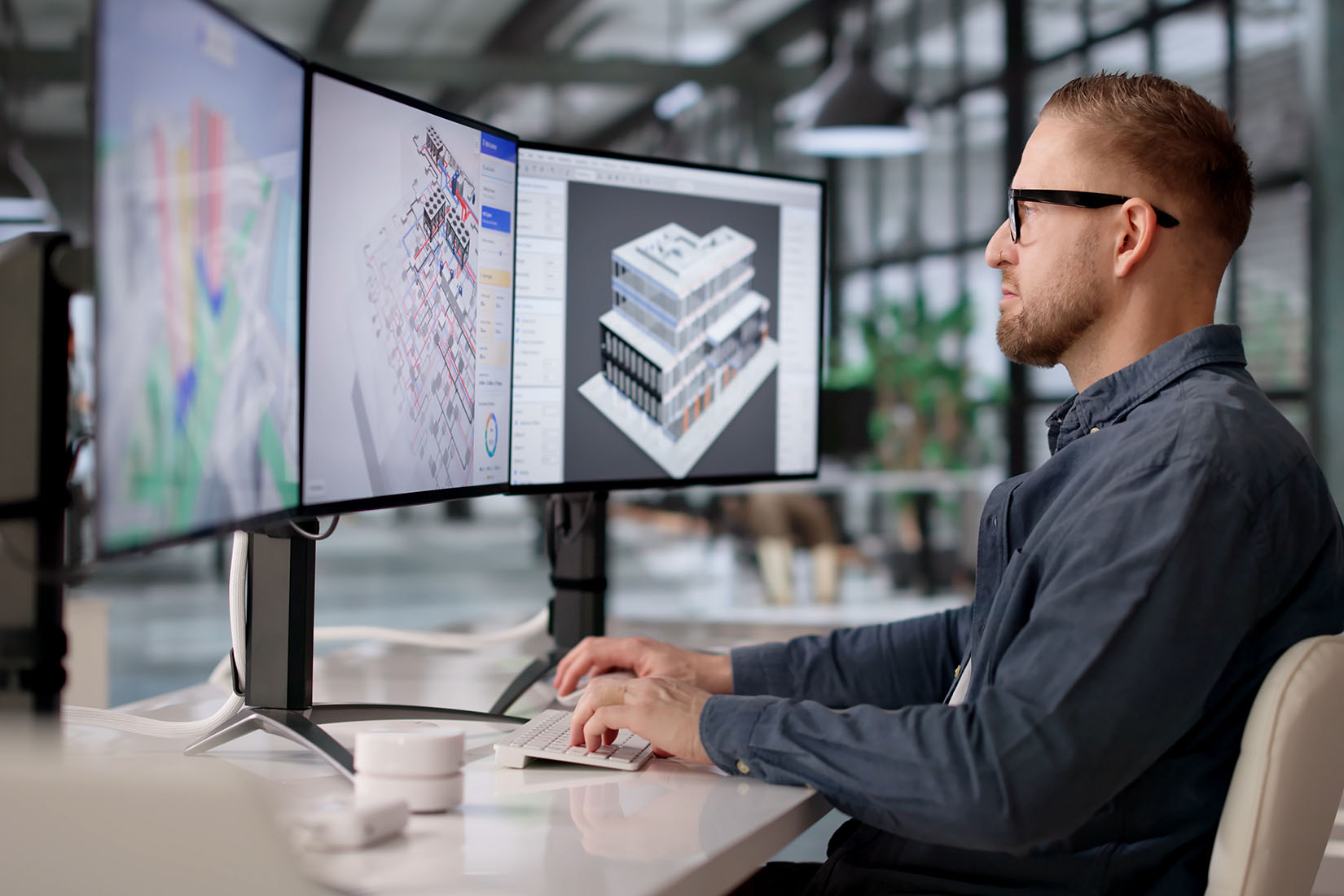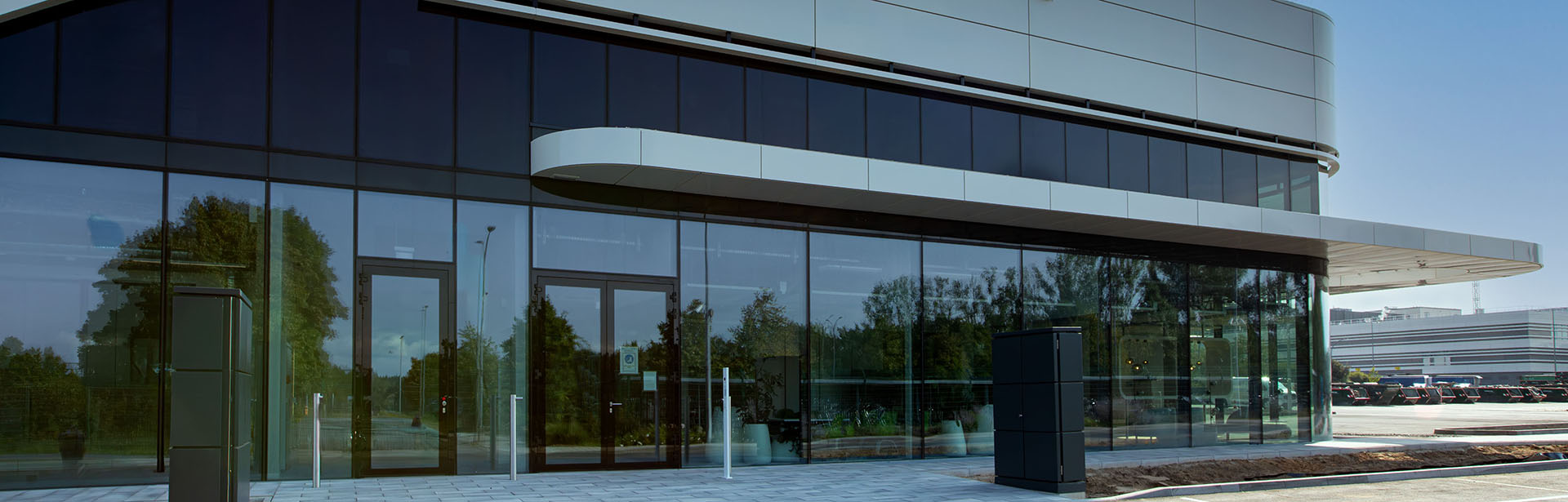
The pharmaceutical industry is undergoing a transformation: active ingredients are becoming increasingly potent, development cycles are getting shorter, and markets are becoming more dynamic. There is a need for production structures that combine the highest safety standards and maximum flexibility with environmental and social sustainability—as is the case at Merck’s new production site in Darmstadt. It meets the KfW-40 standard for industrial buildings and is an outstanding example of how technological excellence and environmental responsibility can be combined. Founded in 1668, this science and technology company is now a global industry leader in the fields of life sciences, healthcare, and electronics—with more than 62,000 employees in 65 countries. In 2020, Merck commissioned io to design the building. It was inaugurated in September 2025—as a forward-looking example of a state-of-the-art production facility for tablet manufacturing under containment conditions.
The new building, with an area of nearly 14,000 m², was designed to serve as an interface between research, development, and production. “For OEB 5 substances, the occupational exposure limit is just 0.1 μg/m³—which is why state-of-the-art containment technologies are indispensable,” explains Felix Schlierenkamp, Senior Consultant at io. The value chain is organized around closed systems rather than manual interventions. This applies to all production steps—from raw material handling through compaction or granulation, mixing, and sieving, all the way to tableting and coating. “Containers with double-flap systems enable low-contamination transfer between the systems,” says Schlierenkamp. “These are supplemented by isolators, rapid transfer ports, liner systems, and CIP (Cleaning in Place) processes.” The result: highly reliable, reproducible, and at the same time flexibly scalable production.
The facility is designed for variable batch sizes to accommodate clinical trial material, early-market volumes, and rising demand. Products can now be brought to market without media breaks—which can significantly shorten time-to-market. “This is where smart organization proves to be a strategic lever,” Schlierenkamp emphasizes. “It’s not the individual piece of equipment that drives speed, but the integration of processes.”
This is where smart organization proves to be a strategic lever. It is not the individual system that drives speed, but rather the integration of processes.

Sustainable, secure, scalable
The integrated system architecture reduces interface risks, minimizes changeover times, and enables adaptive control of production processes. Sustainability is a central component—implemented through a PV system on the green roof, a geothermal system for energy generation, and a wastewater treatment plant for the pretreatment of contaminated production wastewater. At the same time, the facility puts employees first: It offers a modern, motivating work environment while adhering to the highest safety standards—thanks to defined material and personnel flows, optimized routing, automated processes to reduce manual intervention, and a CIP system to minimize strenuous cleaning tasks. The site demonstrates how intelligent organization enables adaptive, networked value creation.