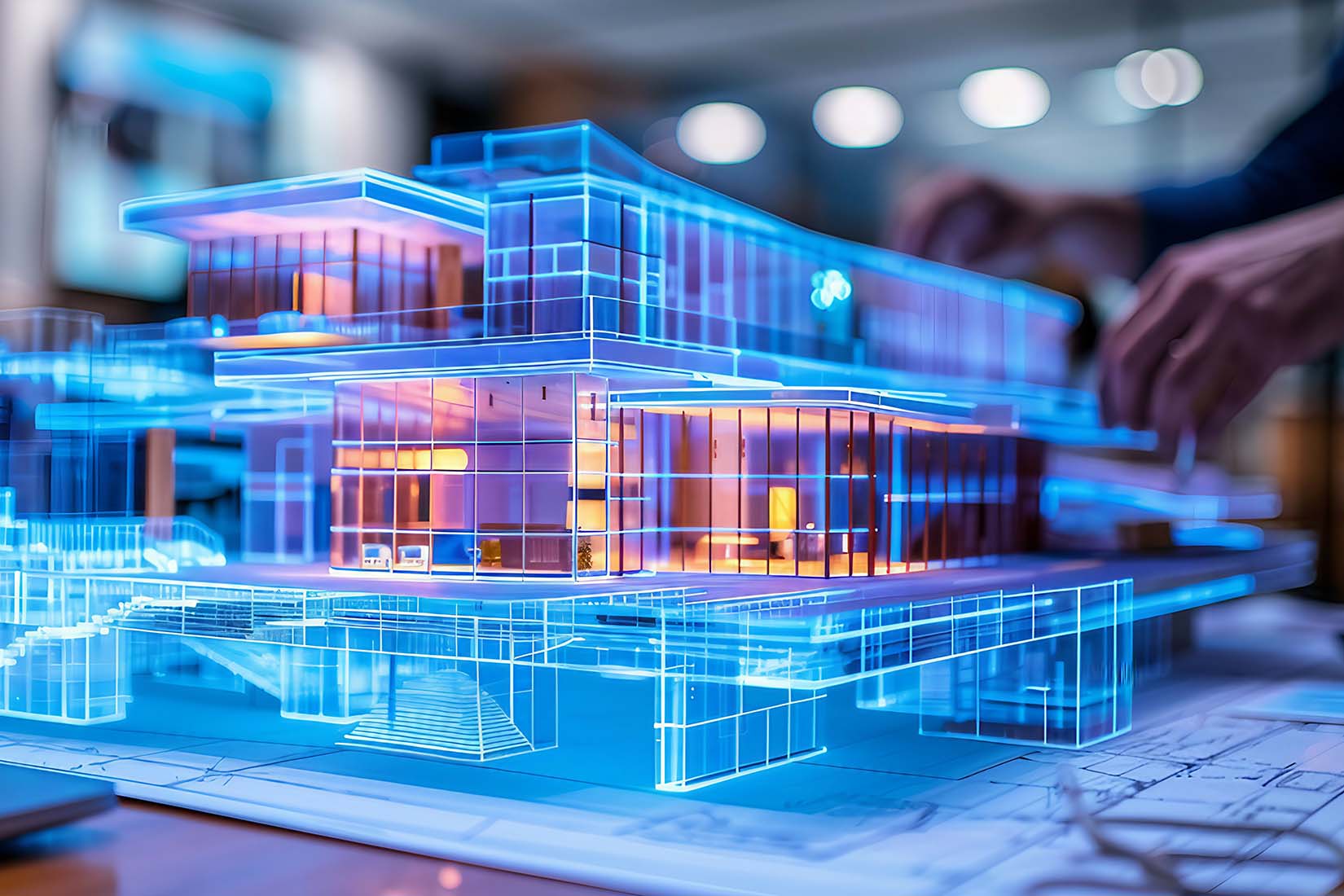
The ongoing digitalization and the increasing use of networked technologies are leading to profound changes in the design and use of modern infrastructure. Against this backdrop, the question arises as to the appropriate tax and accounting treatment of these investments.
1. Smart Infrastructure
Smart infrastructure refers to systems that can be operated more efficiently, sustainably, and flexibly through the use of information and communication technologies, sensor technology, data-driven control, and, increasingly, cloud computing solutions. Cloud-based platforms, in particular, enable centralized data processing, scalability, and real-time control, and thus represent an essential component of smart infrastructure. Investments in smart infrastructure are becoming increasingly important in both the public and private sectors. While balance sheets used to be dominated by tangible assets and intangible assets played a rather minor role, the latter are now more relevant than ever.
For the sake of simplicity, this article consistently uses the term “asset” to refer to aspects of commercial and tax law, even though the correct tax law terminology is “economic asset.”
2. Maintenance Expenses vs. Acquisition or Production Costs
In the case of physical or tangible assets, the question regularly arises during renovations or refurbishments as to whether the costs constitute maintenance expenses that are immediately deductible or whether they should be capitalized as acquisition or production costs and depreciated over the asset’s normal useful life. The decisive factor here is whether the asset in question undergoes a significant improvement beyond its original condition. Drawing this distinction is already challenging for tangible assets, such as in the case of extensive building renovations. It is even more difficult when making corresponding adjustments to existing intangible assets, such as integrating an AI chatbot into an existing website.
The principles, however, remain the same. If an existing asset undergoes a significant improvement beyond its original condition, the costs are considered production costs. They share the tax treatment of the asset that has been “renewed” in this way. For self-created intangible assets, whose importance is growing steadily in the context of digitalization, there is generally a prohibition on capitalizing them for tax purposes. The original expenses directly reduce taxable income. For subsequent expenditures, the distinction between capitalization and maintenance expenses does not arise at all. Under commercial law, there is an option to capitalize self-generated intangible assets. However, this option to capitalize serves primarily informational purposes or to “embellish the balance sheet,” since there is a statutory restriction on distributions and transfers (§ 268(8) HGB, § 301 AktG) for the capitalized expenses.
If, on the other hand, the asset in question is a (tangible or intangible) asset acquired for consideration, the expenses must be capitalized as subsequent acquisition and production costs and depreciated or amortized over the remaining useful life.

Expenses that serve solely to adapt to technical innovations and do not provide a significant improvement beyond the original condition, on the other hand, constitute maintenance expenses that are immediately deductible. Examples include regular software updates or, in the case of tangible assets, the replacement of heating systems or windows with state-of-the-art models.
3. Standalone Assets – Non-Standalone Components
For components such as sensor and control technology in machinery and equipment, the question arises as to whether these are assets that can be valued and used independently—and thus capitalized separately in accordance with the principle of individual valuation—or whether they are merely non-independent components of the respective plant and are included in its acquisition and production costs.
According to case law, independence is ruled out if the items under review are intertwined with the “main asset” through a technical connection or integration in such a way that separation would result in the loss of usability for either the item under review or the “main asset” from which it was separated would lose its usefulness for business operations. Thus, it depends in particular on whether, based on their outward appearance, the items appear incomplete on their own.
Dr. Maximilian Bannes

Dr. Maximilian Bannes has been working at PKF’s Mannheim and Heidelberg offices since 2017. During his time at PKF, he has already overseen several restructuring projects as well as international projects and possesses specialized expertise in structuring cross-border operations. Before joining PKF, Maximilian Bannes spent seven years at KPMG in Frankfurt am Main, followed by another five years working at a mid-sized law firm in Mannheim and, concurrently with his doctoral studies, as an independent consultant. During this time, he advised clients from various industries and of all sizes on all matters related to national and international income tax law. Bannes earned his doctorate in 2017 with a dissertation on “International Tax Planning—Selected Aspects.”
Certified Public Accountant Dr. Maximilian Bannes will be happy to assist you:
In 2018, the Münster Fiscal Court ruled that the control and regulation technology in a biogas plant is not a separate asset, but merely a dependent component of the biogas plant asset. In its statement DRS 24 (Intangible Assets in Consolidated Financial Statements), the German Accounting Standards Committee (DRSC) considers control software that controls the basic function of a machine—without which the machine would not be operational— and which cannot be separated (in terms of value) from the machine, as an integral part of the machine, which must therefore be treated as a single asset together with the machine.


4. Depreciation
The straight-line depreciation of assets first requires that they be subject to wear and tear. Scheduled depreciation is calculated over the asset’s normal useful life. In this regard, particular weight is generally given to the taxpayer’s assessment. Determining the useful life of intangible assets is often difficult, as technical wear and tear is generally not a factor in such cases. According to the tax authorities, certain computer hardware and certain software, such as ERP software, may be assigned a typical useful life—and thus a depreciation period—of one year, although explicit deviations upward from this are permitted. The extent to which this view is compatible with reality will not be discussed further here. The shorter useful life was likely intended by the legislature more as an investment incentive.
5. Rental/Lease Models – Cloud Computing
Under these models, there is no purchase of IT hardware, operating systems, or applications. Instead, the user accesses a provider’s assets via the Internet, such as email servers or ERP software. The service models include:
- Infrastructure as a Service (IaaS)
- Platform as a Service (PaaS)
- Software as a Service (SaaS)
With IaaS, the provider’s cloud hardware infrastructure (servers, storage, etc.) is used. With PaaS, in addition to the cloud hardware infrastructure itself, a ready-to-use working environment—including operating systems—is utilized, which outsources the entire IT software management process and thus significantly reduces the IT administrative burden. An example of a SaaS solution is Microsoft 365. Users access a ready-to-use software application directly through a web browser or an app. The data is stored in the cloud infrastructure, meaning that maintenance, updates, and security are entirely the provider’s responsibility.
The user—that is, the company using the software—is neither the legal nor the economic owner of the software being used. Consequently, the software may not be capitalized on the balance sheet. However, this raises the question of how to handle implementation, configuration, and customization costs, which can be many times higher than the ongoing service fees for the application.
The accounting treatment and valuation of this right are the subject of controversy in the professional literature and case law.
Recognizing a right-to-use license for the software on the balance sheet is typically precluded by the principles governing the non-recognition of pending transactions. According to tax court case law, however, this also determines the fate of customization costs: Without capitalizing the right to use the software, the customization costs cannot be capitalized as incidental acquisition costs either. This is because—as the Munich Fiscal Court stated in its ruling of February 4, 2021 (Case No.: 10 K 1620/20)—without the underlying right of use, the implementation is worthless.
It remains to be seen whether this 2021 perspective will need to be adjusted over time due to legal and economic developments. In any case, according to the aforementioned case law, the recognition of customization costs as a separate asset is also ruled out. In addition to the scholarly opinions that concur with the aforementioned case law, there are also views that—under certain conditions or depending on the circumstances of the individual case—analogous to the accounting principles for tenant improvements in buildings — prefer the capitalization of customization costs as an asset classified as “tenant improvements in software” or as a “sui generis” asset, i.e., one of a unique nature.
Inconsistent Practices, Unresolved Legal Issues
Even the position of the Institute of Public Auditors in Germany (IDW) is anything but uniform in this regard. The legal principles of IDW RS HFA 11—which is relevant for the “accounting for software acquired by the user for a consideration”—were essentially developed at the beginning of this millennium and therefore address only the arrangements prevalent at that time, namely the production or acquisition of software. Service models such as SaaS were developed only later, meaning that the IDW’s position published at that time cannot actually—at least explicitly—address this issue.
However, according to some IDW representatives, the guidance is transferable—and based on that, capitalizing customization costs as a separate asset would conflict with IDW RS HFA 11. The so-called WP Handbook published by the IDW, however, requires
Similar to the accounting treatment of tenant improvements, the capitalization of customization costs is permitted when a third party bears the construction risk for the customization of a SaaS solution used by the reporting entity, even if the reporting entity does not acquire economic ownership of the software. In any case, these differing views lead to inconsistent accounting practices and are therefore fundamentally unsatisfactory or—depending on one’s perspective—leave room for accounting policy manipulation.
It will likely be some time before the Federal Fiscal Court rules on the first cases involving customization costs in cloud computing—and thereby establishes accounting principles for such costs that legal practitioners can follow. The fact that the tax authorities have so far remained silent on this issue inevitably leads to legal uncertainty.