Between a New Beginning and the Pressure to Conform
io has been a member of the BDLI since 2025. Thanks to its many years of experience in the planning and design of modern, complex, and highly automated production facilities, io has established numerous connections across a wide range of industries. From planning production facilities for large in-flight catering operations to test stands for aircraft engines, io is your expert partner in the field of modern, connected, and innovative factory planning. Through its approaches in the area of General Planning // plus, io also possesses the expertise and capabilities to keep pace with the demands of the aerospace and defense sectors and to provide significant support in helping them achieve their goals.
Marius Schiemer, Defense Specialist at io, spoke with Marie-Christine von Hahn, CEO of the BDLI, and Adrian Siegler, Managing Director and Partner at io, about the industry’s current trends and challenges.
Ms. von Hahn, German industry is facing massive structural change—from digitalization to decarbonization. Which of these challenges do you currently feel most acutely in the aerospace industry?
German industry as a whole is at a turning point: With growth stagnating, we must simultaneously become more digital, more sustainable, and more resilient. This transformation affects nearly all sectors, and the aerospace industry is no exception. However, we have one major advantage: Our industry is on a stable growth trajectory and is open to innovation and technological change.
That is why we view issues such as digitalization and decarbonization as opportunities. Digitalization makes our complex value chains more efficient, transparent, and faster. And sustainability is no longer just an “add-on” in our industry—it is a prerequisite for competitiveness and growth. More efficient engines, lighter and more durable materials, and alternative energy sources are key to decarbonization and the economic viability of our companies.
Ms. von Hahn, the path to climate neutrality requires enormous investments from all sectors. How can the industry finance this transformation without losing ground internationally?
The path to climate neutrality is a massive challenge—including for the aerospace industry. For us as manufacturers and suppliers, this means doing everything we can to make air travel as energy-efficient and cost-effective as possible. Two pillars are central to this effort: the gradual introduction of sustainable aviation fuels (SAF) and the consistent development of efficient technologies—from lightweight materials and aerodynamic improvements to new propulsion systems. We are investing heavily in these areas to both achieve climate goals and ensure our international competitiveness.
For this transformation to succeed, however, the industry needs reliable and long-term framework conditions. Climate protection must not become a competitive disadvantage. While policy instruments such as the Carbon Border Adjustment Mechanism (CBAM) pursue the right goal, they must be designed in such a way that they do not place an additional burden on the industry—especially those companies that rely on international supply chains.
Mr. Siegler, the aerospace industry is under enormous pressure to innovate and control costs. How can a consultative and collaborative planning approach—such as the one offered by io—help companies transform these conflicting demands into tangible competitive advantages?
As Managing Director of io, I see consultative and collaborative planning as a decisive factor in transforming innovation and cost pressures into sustainable competitive advantages. Our approach is based on very close collaboration with our clients—from initial strategy development through to successful project implementation. We bring not only deep industry knowledge but also methodological expertise and innovative strength to the table. By integrating best practices, tailored solutions, and a forward-thinking perspective, we help companies shorten their innovation cycles, optimize cost structures, and simultaneously significantly improve the quality of their processes. For us, partnership means taking joint responsibility and making success measurable.

Ms. von Hahn, many companies complain about a shortage of skilled workers and excessive bureaucracy. How do these factors threaten the international competitiveness of German industry—and what changes are needed at the policy level?
Our aerospace supply industry, which is heavily dominated by small and medium-sized enterprises, is suffering increasingly from excessive bureaucracy. Reporting requirements and regulations—such as those under the Supply Chain Due Diligence Act or the EU CSDDD—tie up significant human and financial resources. Even companies that are not directly subject to reporting requirements are confronted with onerous obligations through the supply chain. Furthermore, there is often a lack of practical, digital solutions to efficiently fulfill these obligations. This leads to additional, non-value-adding administrative work—a serious competitive disadvantage at a time when labor and energy costs are already high. We, too, are affected by the shortage of skilled workers; however, thanks to our growing industry figures, we can offer well-trained professionals opportunities that they may not currently have in other industries.
Mr. Siegler, io supports industrial companies from strategy through to the implementation of complex sites. Where do you currently see the greatest need for integrated solutions—particularly in technology-driven industries such as aerospace?
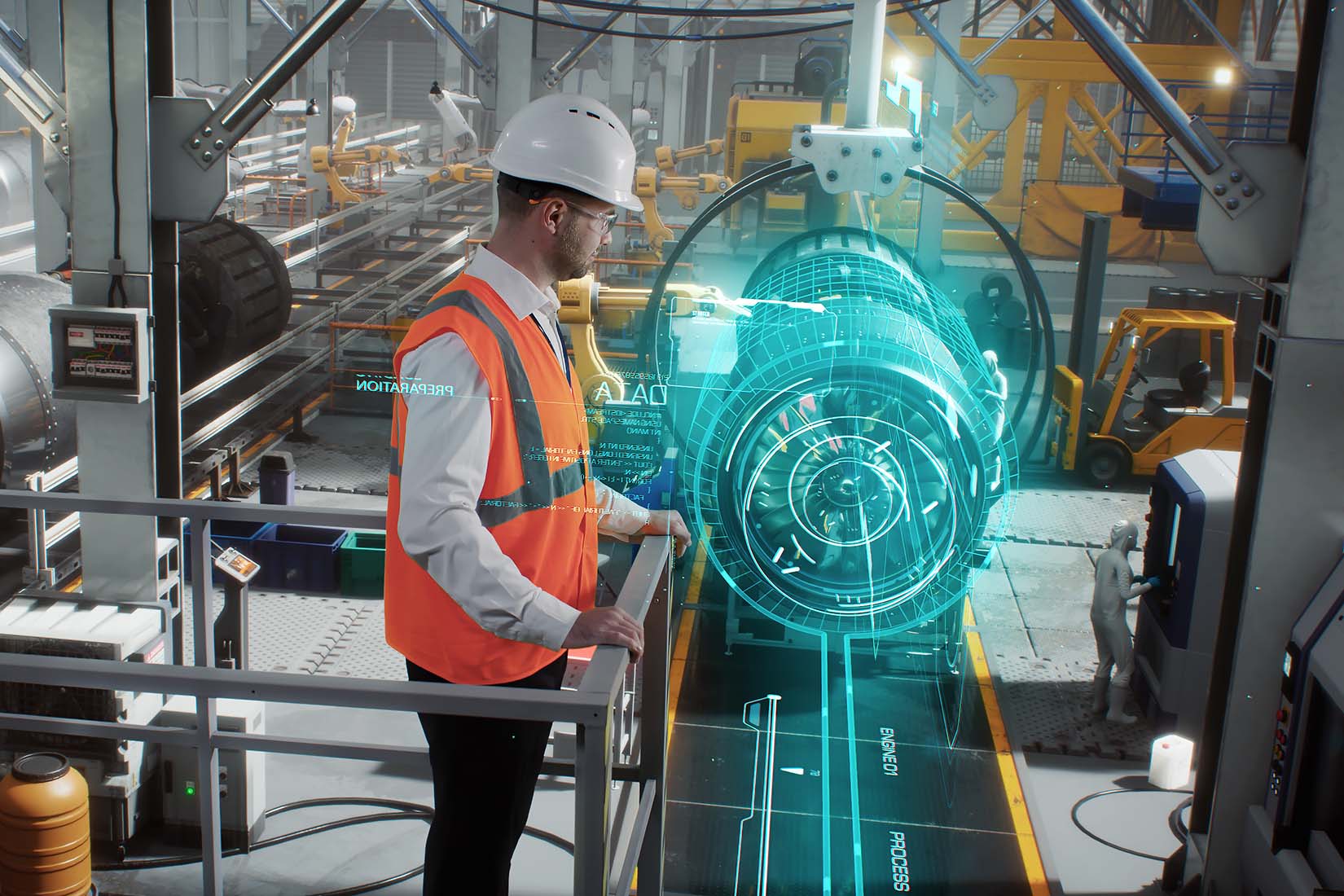
The greatest need currently lies in the holistic integration of production, logistics, and IT systems. In the aerospace industry, the demands for precision, traceability, and responsiveness to changing conditions are particularly high. io offers a portfolio that ranges from production and logistics planning to the digitization of value chains and the implementation of Industry 4.0 solutions. This portfolio is complemented by the necessary architectural, building systems, and project management services. Modular, scalable concepts that seamlessly integrate both existing and new technologies are currently in particularly high demand. Our experience shows that companies that adopt integrated solutions early on significantly strengthen their ability to innovate and their competitive position.
Mr. Siegler, the transition to sustainable, digitally connected production and logistics systems is a key issue. How does io manage to design projects in a way that ensures they remain economically viable and sustainable?
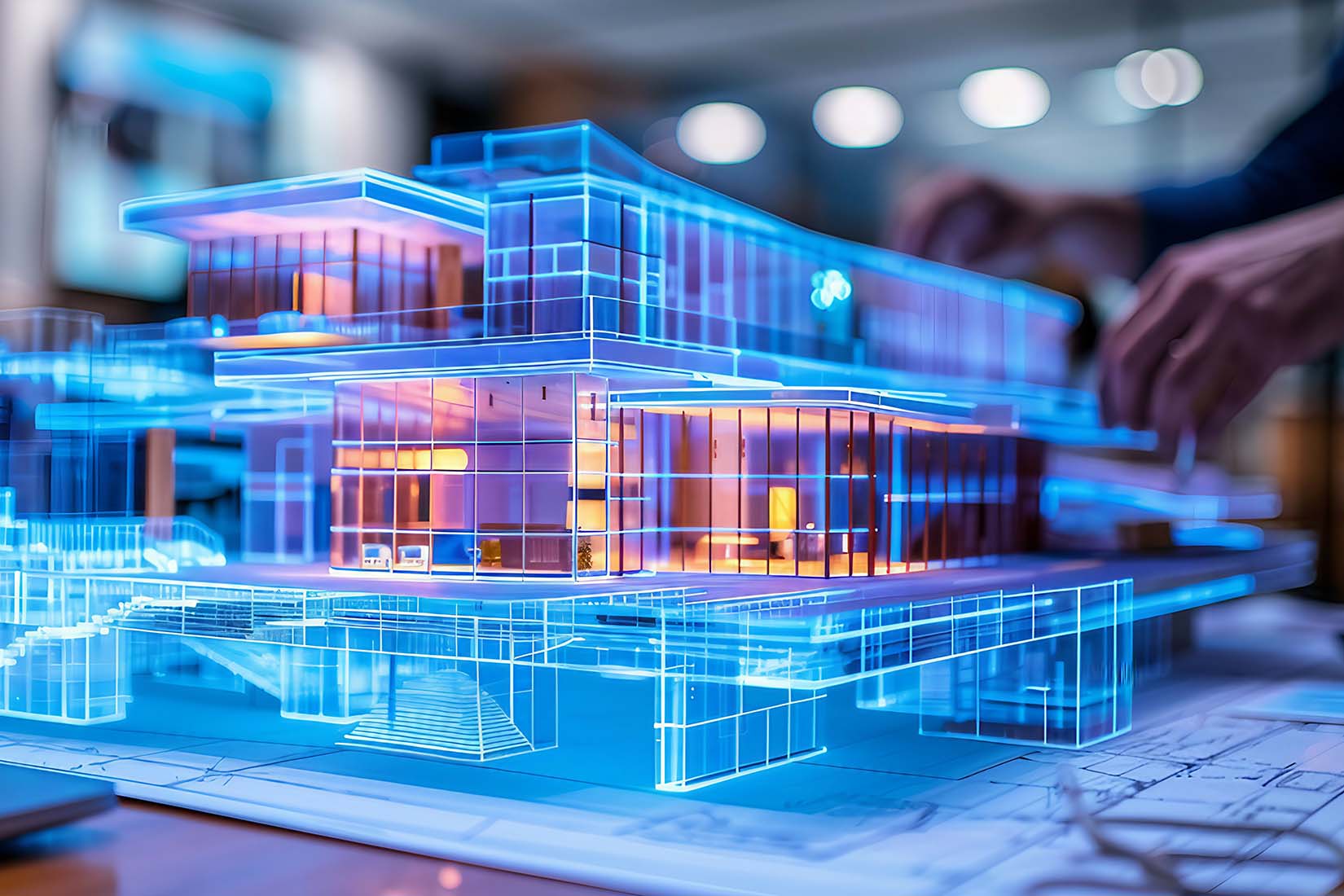
We take an integrated approach that combines economic viability with future-readiness. This begins with a thorough analysis of the initial situation and a clear definition of the client’s specific needs, and extends all the way to the implementation of sustainable, digitally connected systems. io relies on innovative technologies such as digital twins, Building Information Modeling (BIM), VR, AI-based analyses, and intelligent automation of the entire planning process. At the same time, we prioritize resource efficiency and a high degree of flexibility. By closely involving all stakeholders and employing agile project management, we ensure that projects are not only economically viable in the short term but also remain sustainable and adaptable in the long term as customer needs evolve.

Ms. von Hahn, the aerospace industry has traditionally been strongly driven by innovation. In your opinion, what role does it play as a driver of innovation for other industrial sectors in Germany?
The aerospace industry is one of Germany’s strongest drivers of innovation—across its entire spectrum. In both civil and military aviation, products do not simply mature once they reach the customer; rather, they must meet the highest safety and quality standards from the very beginning. This requires mature technologies and means that our industry invests more than average in research and development—most recently, around seven percent of revenue. The high level of technological complexity gives rise to innovations that find their way into key industries—such as the automotive, energy, security, and medical technology sectors. This is particularly true for space exploration, which plays a central role in technological progress. Space exploration creates high-tech jobs, strengthens industrial sovereignty, and drives technological leaps forward. Anyone who invests in space exploration is always also investing in the innovative strength of the entire German economy.
Ms. von Hahn, in light of geopolitical tensions and global supply chain issues: How self-sufficient must German industry—particularly the aerospace sector—become in the future?
The German aerospace industry must remain globally connected while at the same time securing its technological sovereignty. Take the European space program as an example. Here, we must become significantly more self-sufficient without giving up international cooperation. Europe needs its own capabilities in all key areas—from launch vehicles and satellites to space-based communication and navigation services. This is how we safeguard our strategic independence, security, climate protection, and economic strength.
The greater the risk of relying on others, the more important independence becomes: When it comes to critical raw materials, rare earths, or key technologies, we must establish security of supply, recycling, alternative solutions, and strategic stockpiling at the European level—supported by off-take guarantees, investment capital, and long-term regulation. Only in this way can Europe remain resilient, competitive, and innovative.
Mr. Siegler, many companies face the challenge of restructuring existing systems without disrupting ongoing production. What methods does io use to reliably manage such complex change processes?
Over the past few years, we have developed highly effective project management tools. These range from structured migration planning—which focuses on technical systems and their interdependencies—to migration planning that is sometimes highly data-driven, including the consideration of ramp-up and ramp-down strategies, all the way to comprehensive scheduling and project management. In addition, lean methods are used for time-critical projects to increase efficiency and transparency. The use of 3D visualizations and the integration of all plans into a central Building Information Model (BIM) greatly support planning and communication with all stakeholders. As a second component, we offer our clients structured change management that takes organizational and human aspects equally into account in order to identify and minimize risks early on. For us, close contact with operational colleagues on the shop floor is of the utmost importance—both to ensure frequent and transparent communication and to foster acceptance of the planned changes.
Mr. Siegler, io sees itself as a partner on equal footing—not as a traditional service provider. How do you put this understanding of partnership into practice in projects, particularly with large industry associations or consortia such as the BDLI?
We work very hard to develop long-term client relationships—this is our top priority. To achieve this, a partnership on equal footing is essential—one that goes beyond the mere exchange of technical expertise and takes into account aspects such as proactive engagement, a deep understanding of the client’s needs, and a very high level of mutual trust, particularly when addressing our clients’ strategic issues. We view our clients’ goals and challenges as our own. In projects with major associations such as the BDLI, we proactively contribute our broad expertise, foster open dialogue, and strive to spark innovation in order to actively drive technical progress.

Ms. von Hahn, many small and medium-sized businesses feel left behind by policymakers and large corporations. What role do you see for small and medium-sized businesses in Germany’s industrial future?
SMEs are the backbone of our industry. In the aerospace sector, they are highly specialized and innovative. There are close interdependencies between SMEs and the major OEMs: without the agility and creativity of SMEs, there would be no technological progress; without stable partnerships, there would be no planning certainty. To ensure that SMEs can continue to fulfill this role in the future, they need clear signals from their customers, a reliable political framework, and better access to capital. If we can achieve this, SMEs will remain a key enabler and driving force behind Germany’s industrial future.
Mr. Siegler, in the aerospace industry, the highest technical standards go hand in hand with long development cycles. What experience does io bring from other high-tech industries that could be particularly relevant to BDLI members?
In addition to our aviation expertise, io has many years of experience in core industries such as the automotive industry, mechanical engineering, medical technology, and the pharmaceutical/life sciences industry. These industries are characterized by a high pace of innovation, complex supply chains, and strict—and in some cases regulatory—requirements—much like the aerospace industry. We apply proven methods such as digital transformation—for example, when it comes to the design and implementation of SAP solutions—as well as lean management approaches that make production and logistics processes more efficient and responsive. Another key focus is the io Analytics portfolio. We provide our clients with operational dashboards throughout their entire supply chain—for example, addressing issues related to intralogistics, transport optimization, or strategic considerations—and also offer various AI-powered optimization and forecasting models that can be applied across all industries.
Mr. Siegler, when you think about the industry of the future, what skills does a partner like io need to truly drive technological and cultural change in the aerospace industry?
I see challenges such as geopolitical shifts and the corresponding need for robust supply chains, as well as the necessity to work on further developments—such as materials for lightweight construction solutions or smart, predictive maintenance systems—in day-to-day operations. To achieve this, a partner needs not only technical excellence but, above all, the ability to understand and design complex systems. This includes expertise in analytics, digitalization, change management, and project management. These skills must be understood and applied in an interdisciplinary and holistic manner so that complexity can be managed and economically sound solutions can be developed for customers. io brings these competencies together in “one” team of experienced consultants, engineers, architects, and digitalization experts—and sees itself as precisely this trailblazer for change in the aerospace industry.
Ms. von Hahn, if you had one wish, what single measure would have the greatest positive impact on the competitiveness of German industry?
Above all, I would like to see one thing: a clear commitment in industrial policy to the aerospace sector in Germany. Competitiveness is determined today—by the course we set for future programs and industrial capacities. For civil aviation, this means reliable framework conditions and political support for establishing future production and research projects. At the same time, we must recognize the enormous future potential of spaceflight for Germany and Europe and consistently capitalize on it. This requires real investment in companies and development projects, swift implementation, and a clear national strategy.
Aviation and space are not some distant pipe dream; they affect us all—every day. I would like to encourage everyone to stay curious, ask questions, and perhaps even let themselves be inspired by the fascination of this industry. Because one thing is certain: the future begins up there.