Investment decisions regarding production, logistics, and the supply chain are not made lightly. They come with increasing demands for flexibility, resilience, and cost-effectiveness, which call for new planning approaches. To ensure transparency, these approaches incorporate digital models, simulations, and digital twins, allowing decisions to be thoroughly validated before implementation.
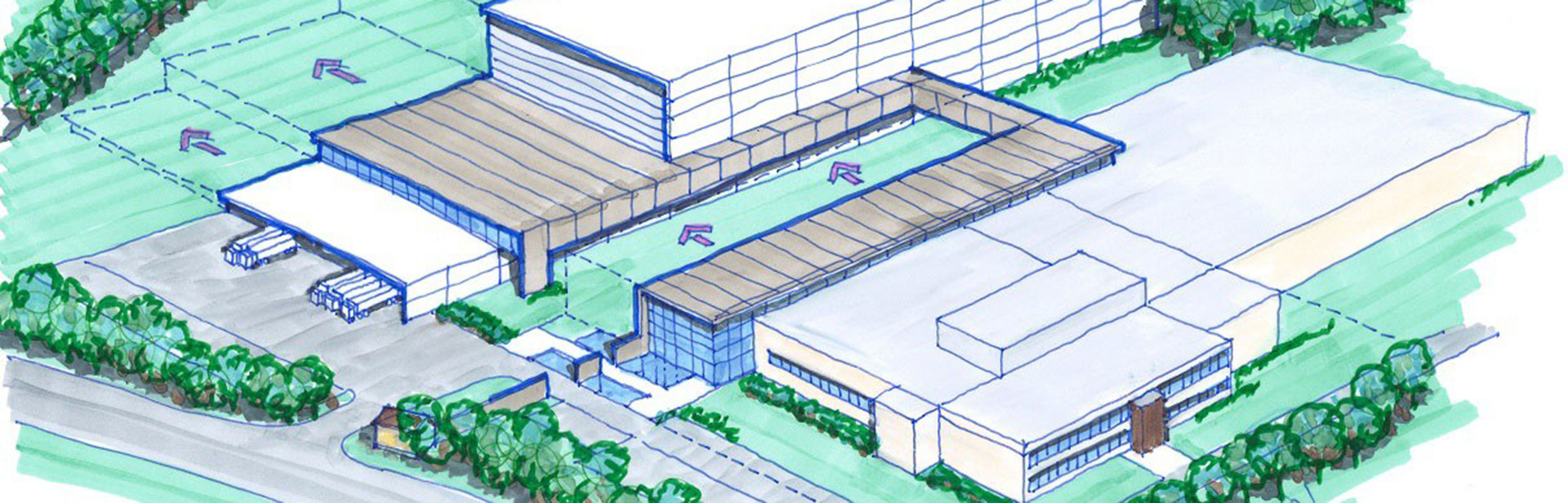
Many companies still associate digital planning primarily with CAD models or BIM applications. In fact, these models form an important foundation, as they provide a structured description of buildings, facilities, and processes. However, the real added value only emerges when the static representation is transformed into a decision-making model. While BIM and object-based models depict the structure of a system, simulation enables the analysis of its dynamic behavior. Material flows, utilization rates, bottlenecks, or disruptions can be examined realistically before investments are made.
Making Informed Decisions Before Costs Are Incurred
Today’s production and logistics systems are characterized by numerous uncertainties. Fluctuations in demand, a shortage of skilled workers, volatile supply chains, and increasing levels of automation make planning difficult. Digital models make it possible to evaluate different scenarios early in the project. For example, companies can assess:
- What capacities will be needed in the future
- Which layout offers the highest performance
- How resilient a system is to disruptions
- Which automation solution makes economic sense
This makes risks visible early on and helps avoid poor decisions with long-term consequences.
From Simulation Model to Digital Twin
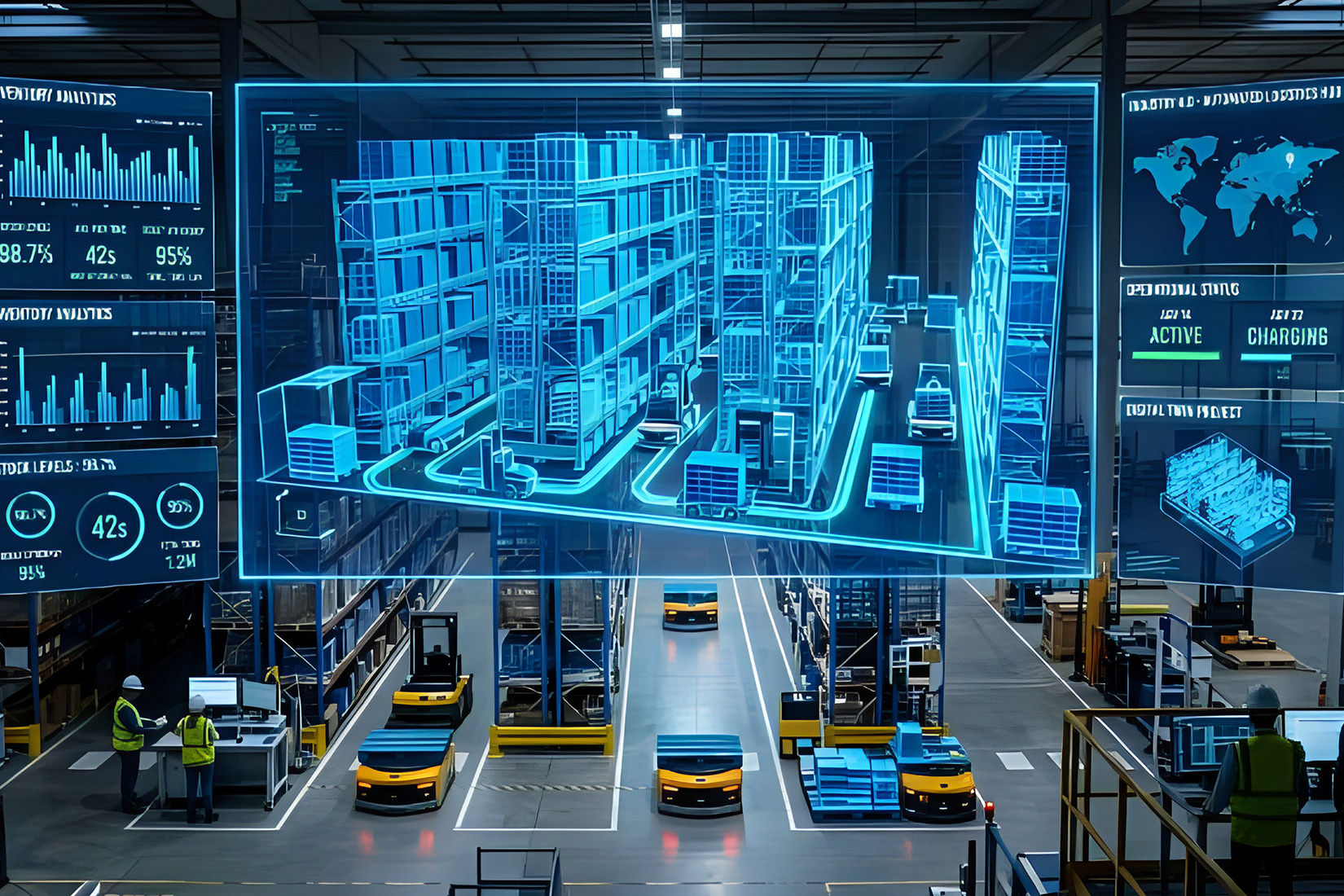
While simulations are primarily used for planning, digital twins bridge the gap between the virtual world and real-world operations. Operational and sensor data are continuously fed into the model, enabling it to be updated in real time. This allows companies not only to forecast future developments but also to better support operational decision-making. The digital twin thus serves as the link between planning, operations, and continuous optimization.
In factory planning, digital models help with the design of production lines, buffers, and automation concepts. In intralogistics, they assist with the sizing of warehouses, conveyor systems, or autonomous transport systems.
Digital models are also gaining importance at the supply chain level. Site structures, inventory strategies, and transportation networks can be evaluated under various market and disruption scenarios. This creates a robust foundation for strategic decisions.
The Right Question Before the Right Model
The success of digital planning depends less on the software used than on the objective. It is crucial that the model be tailored to a specific question. Companies should therefore first define which decision needs to be supported. Only then should modeling, data collection, and technological implementation follow. Equally important are valid data and transparent validation of the results.


Conclusion
Digital planning is increasingly becoming a strategic competitive factor. Object-based models create transparency, simulations reveal interrelationships, and digital twins bridge the gap between planning and operations.
Those who consistently use digital models as decision-making tools can evaluate investments more reliably, reduce risks, and sustainably increase the performance of production, logistics, and supply chain systems. As a result, digital planning becomes a key driver for future-proof industrial and logistics structures.