Should an existing factory be modernized, or is building a completely new facility the better choice? For a long time, this question was seen as a classic either/or decision. Not anymore: Companies can apply greenfield principles to existing sites, thereby laying the foundation for greater efficiency, flexibility, and future-readiness without having to forgo the benefits of existing infrastructure. This “hybrid thinking” is transforming the way industrial companies develop their production networks.
Hybrid thinking does not mean completely rebuilding existing facilities from scratch. Rather, it involves applying the planning principles of successful greenfield projects to brownfield environments. Instead of addressing individual bottlenecks in isolation, the site is viewed as a holistic system. This shift in perspective typically unlocks significant potential.
Rethinking Material Flow and Layout
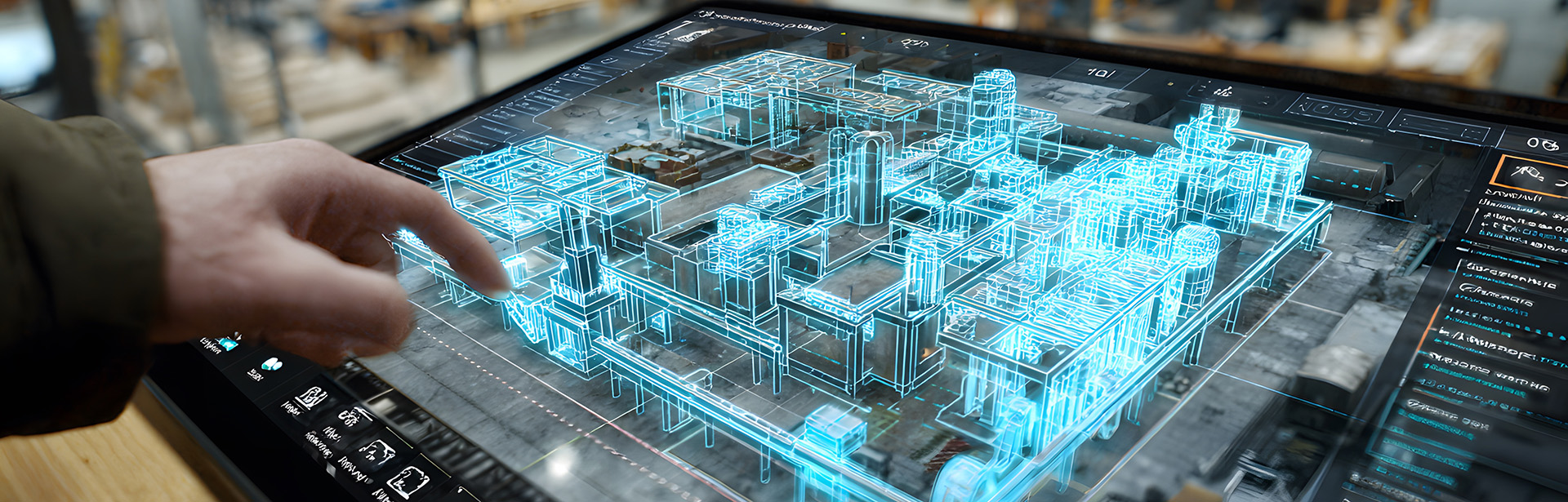
Many existing plants have grown over decades. Production lines have been expanded, warehouse space repurposed, and new processes integrated into existing structures. This often results in complex material flows, long transport routes, and inefficiencies—some of which are obvious, while others are hidden. A greenfield-inspired approach therefore often begins with a fundamental analysis of the factory structure. Using 3D models, simulations, and digital twin technologies, alternative layouts can be tested virtually before any physical changes are made. This allows various aspects—such as transport routes, lead times, or space utilization—to be taken into account directly during the planning phase.
Even when structural constraints remain, a systematic reorganization of production and logistics areas—in the spirit of Greenfield planning—often yields surprisingly significant gains in efficiency and
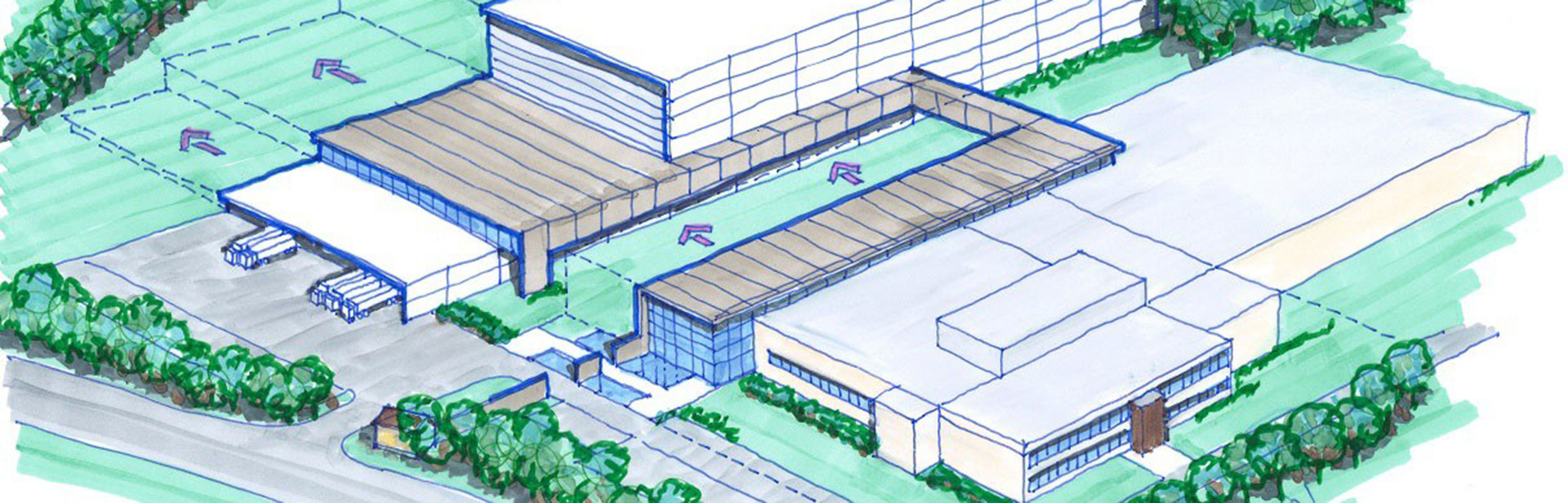
Innovation gains. Many projects also show that smaller structural expansions—such as an additional annex or a new expansion module—create the necessary flexibility to better organize the entire site.
Transformation While Production Continues
One of the greatest advantages of hybrid strategies lies in their ability to be implemented in stages. While greenfield projects often generate benefits only after they are fully completed, brownfield transformations can take place in parallel phases. New production areas are set up, tested, and gradually integrated while production continues. Modular concepts are particularly successful in this context. Individual production areas or logistics modules are set up step by step—much like in a “factory within a factory”—and later integrated into the overall structure.


Upgrade digitally. Stay flexible.
For companies operating in highly dynamic markets, this creates a decisive advantage: they can respond more quickly to changes in demand without having to take on the risks associated with building a completely new facility. Digitalization is seen as the key enabler here. Industry 4.0 solutions now make it possible to retrofit existing sites with relatively little effort. As a result, even older production sites can achieve the levels of transparency, automation, and scalability that were previously reserved for new facilities. Careful integration planning—with early involvement of the various planning disciplines and interfaces—is crucial in this regard. Existing structures and systems must be evaluated and coordinated early on to avoid surprises later on. Successful companies therefore first invest in a comprehensive analysis of their current state to develop a long-term transformation roadmap based on this analysis.
People as a Key to Success
Efficient technical solutions alone do not guarantee success. Unlike traditional greenfield projects, changes in brownfield and hybrid environments encounter existing organizational structures, established processes, and—in some cases—long-standing routines. Employees must embrace new technologies and learn new ways of working. At the same time, they possess valuable experiential knowledge that is indispensable for a successful transformation.
Professional change management is therefore one of the key success factors for hybrid projects. This is especially true because actively involving employees reduces resistance and improves the quality of implementation.

Conclusion
Today, the question “Greenfield or brownfield?” is asked less and less often. Successful industrial companies combine the advantages of both approaches within the same project. Those who consistently apply greenfield principles to existing sites can unlock efficiency potential, rethink and rebuild the site in a modular way, accelerate digitalization, and at the same time benefit from shorter implementation times and lower initial investments.
Hybrid thinking is thus increasingly establishing itself as a guiding principle for the further development of production and logistics sites. The approach integrates strategic, organizational, and spatial considerations, helping to ensure that production sites remain flexible, cost-effective, and future-proof in the long term.